
UAS News Podcast — 2015-06-16
Transcript
Music Alright and welcome to the next installment of the UAS News Podcast Series. I'm your host Patrick Egan and as always let's welcome our co-host Mr. Gene Roberts. Gene are you out there?
Hello Patrick, I am still out here and we are trying to dry out. Alright, some technical difficulties. I hope you can hear me loud and clear but for some reason we weren't sure it wasn't really going good. Can you hear me?
Okay good, I can hear you fine. You're a little fuzzy. I don't know what the problem is with your microphone but you may be a little fuzzy. Alright, well we'll just have to go with what we got here.
Anyway, I wanted to, it's been a while since we've had a podcast. You cleared up now. Good. Okay good.
And you know, it's been a little while since we had the old podcast going. I think it was April or something was the last episode we did. But anyway, I know you were down there in Texas. It was in the news.
We've had some floods and I thought it would be of interest to people. People might not know that you can use drones or UAS for SAR. Did you know that?
You can use these for SAR? I had an inkling that you could do that. It was an idea that came to me a little while back but I had an inkling, yeah. Yeah, well you know, it's something new.
I mean, you know, I think I just read about real estate photos, farming, and something to do with the movies. I think you might be able to use drones for that. But you know, so the SAR thing, I think we're going to hear about it in the news with drones. We had some big floods down there in Texas and maybe you can kind of describe to the listeners the scope of what was going on down there and you know, and some of the lessons learned in this recent event.
Yeah, there's going to be a lot of information on this one that comes out, Patrick, and it has been one of the most incredible events that I have ever participated in. First, I think, first and foremost, we need to send out our thoughts and prayers to the McCombs and Chambres families. And you know, we are still searching for two of the children from that family. They have not been recovered.
So we definitely want to send our condolences and our thoughts out to those families. But you know, it was just one of those things that if you weren't there to see it, you just could not believe it. Because this is, Wimberley is a very small little tourist town. We have, you know, 7,000 people on a good day, 8,000 people.
And we rely a lot on tourist traffic and that sort of thing. And Memorial Day weekend is obviously a big weekend. It's a three day long weekend. Unfortunately, we had the perfect storm for flash flooding and river flooding.
At the headwaters of the Blanco River just to the north of us, we got 10 inches of rain in 24 hours, which, so the hill country is unusual. The drought is officially over. And because of that 10 inches of rain, we had what was called the millennial flood. And you've heard about the 100 year floodplain and the 500 year floodplain.
We went outside that. So they are calling it a millennial flood. Since I've been here, I've watched the water over the Blanco River come up to the bridge that goes over the river. And it's a very well built bridge and it's 42 feet or so above the river water.
And we've seen it come close a couple of times. But this time it was eight feet over that bridge. And there were, according to the USGS folks, there was the equivalent of two Niagara Falls going down that river per second. 230,000 cubic feet per second. Wow.
A lot of water. Just tons of water. And houses being swept off of their foundations. And I work with the fire department, as you know, down here in Wimberley, as their drone driver, as they call me.
And they started their calls at 930 on their first swift water call, as we call it. Between then and 5 o'clock the next morning, they had done 100 calls that night. And those guys, I got my hats off to those guys. They dove into a raging river with debris in it in the dark.
I wouldn't do that on a good day in daylight. And they were out there trying to rescue people in this raging torrent. And some of them are going to be changed because when you hear people going down the river at 40 miles an hour clinging on to debris and screaming for help and you can't find them, that's a pretty rough go. Oh yeah, to say the least.
So that's what sort of set up the scenario for us and what we had to deal with. You know, 52 feet, 56 feet above flood stage. Cars, people, animals, everything being washed down the river. And as we woke up Sunday, we knew we had something big.
There were folks that didn't even, they never went to sleep. But we knew we had something big and there was going to be a lot of resources brought to bear. And we established an incident command. I say we, but our emergency management office established an incident command on Sunday and they began plucking people off of rooftops and out of trees Sunday using Black Hawk helicopters.
And there were times when the Black Hawk could not fly. I mean they're all weather, yes, but you know when the deck is at 300 feet or 400 feet it's kind of difficult for them to fly over the trees and do their jobs. But I personally watched from incident command probably a dozen trips in with people that they had plucked off of roofs. So, you know, again hats off to those guys.
And then we began the search effort in earnest on Monday. And can't tell you how much we learned on this because I happen to be a pilot. I got made the air boss, which is something that I was really surprised about. But we were deployed to go to a couple of different areas to do searches.
Now, one thing I want to stress in this entire deal is that on Monday, this place was pretty much flattened. No communications at all. We've no internet, no phones, cell phones barely worked. And I put in my request to the FAA for an emergency COA and a temporary flight restriction via text on my cell phone.
How did that work? I was very pleased and amazed to see that I got a response and I got the emergency COA in place in 45 minutes from Washington DC. That's pretty impressive. And that is using text only.
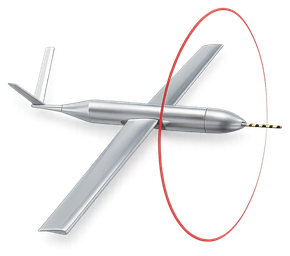
Now, there were some, we tried to get two aircraft in there to use, but there was some communication failures in there that we had to rectify a little later on. But we did get the authorization and we did go out and we were actually deployed with a specter team was deployed and we went out under the coordination of incident command to help upriver, North River. And there was a helicopter out there that we coordinated with and they flew the river and we're looking just like us. And they found several items of interest that the ground teams went and investigated.
But more interesting, we found as we came along with the specter and flew the river, we found four vehicles underwater. And it's just something that until you see it, if you were an observer in a helicopter, it would be very difficult to pick out. But again, as I've always preached, having that still image, man, it makes all the difference in the world. And you can look at it, zoom in on it and you can say, hey, what's that spot there?
And as you zoom in, you discover that you're looking at the license plate on the bumper of a car that is nose down in the river up against a low water crossing. And had you not taken the time to zoom in on that and drill in on that, you wouldn't have even thought that it was a vehicle because it was nose down. Right. And in a position that we're not usually, or let's say used to seeing.
I know that's probably in this deal and I mean, I'm assuming, but in this incident here is a lot of things that you probably see like this that don't really make sense or normal sense. You know, when you see a Ford F350 up in a tree, that's something that you just don't normally expect to see while you're flying around. But the river was capricious and it spread material and property for, you know, 87 miles. That's the length of the Blanco River.
So, so, you know, it was it was very interesting to take the specter out and fly those areas of the river. And I will have to say that we did defer many times command aircraft. That was that was the way it worked. And it was important to do that.
Now, one of the things that we had a problem with is there were a lot of folks out there that really, really wanted to help. I mean, this this was one of those things that, you know, help was taken by, you know, all offers and any comers. And it was something that was hard not to want to participate with. But we had several folks come in from out of town that said that they were UA operators and they were authorized and they were going to go fly and they were going to help with the search effort.
Air boss, I got OK. I was going to ask you that question. So at this time, when this is going on, what role were you playing in the search?
And you just said that. So at this point, you went out and flew some missions. But at this point, you had taken over the duties as their boss, correct?
That is correct. And it was my job to coordinate both manned and unmanned assets. And the McCombs family mustered a literal army of help to come down here and search for their loved ones. And at one point, they went and essentially took over one of the larger churches down here and used it as their operations center.
And at one point we had 16 Robinson R44 helicopters parked in the parking lot of the Baptist Church. And this was in addition to the Blackhawks, the Turbo Astrias, everything else that the other agencies were using. So and this is in a, you got to understand, this is in a small area. It's like, you know, five, ten miles.
And to have that many pieces of equipment up in the air all at once, ferrying searchers back and forth and dogs and animals and materials and stuff like that, you're just doing your best to try to keep the tenfold rain and the midair part swaps to a minimum. So it became obvious that those duties were significantly more important. And, you know, I happily filled that role and we worked it out. The TFR was established and we had a 13 mile radius that was a TFR and every.
Go ahead. And so you had all of those assets were operating in that TFR?
Yes, that's correct. And they all had to be by permission. That was a lot of traffic, you know. It was a lot of traffic and sleepless nights because, you know, because it was a TFR, even the air ambulances, the Star Flight to Light Flight from both San Antonio and Austin, they had to ask permission to come in.
And as you might well imagine, in this particular case, there were a lot of incidences where people had to be medically evacuated and they don't wait until, you know, nine o'clock in the morning to do that. It's generally one, two, three o'clock in the morning. So they still have to have permission. And unfortunately, I was the one that gave had to give them their permission.
Well, now, you know, and we're getting off because we were going to talk about some other things that we're going to talk about. And we're getting off because we were going to talk about some other. I know you wanted to get to something else about where you were talking about here with people volunteering. But as all of this is going on, are you still in like a comms denied environment?
What are you using for communications now? Was the Internet down?
Did you have cell phones, radio, smoke signals? What were you using?
OK, it was pretty interesting because they worked very diligently to try to get our comms back up. And we were using the TAC radios that the fire department and the county uses. And they were helpful, but they're limited without a repeater. So you've got maybe a two, three mile radius.
We were also using aircraft handheld radios, which I got to tell you, an aircraft handheld radio on the ground is pretty useless. Unless that copter is hovering within three blocks of you, they're not going to hear you. So again, the donations came. We got a base station radio and the incident command.
And that's what I get to live by for the two weeks that I was in there. And that helped immensely. Even those handheld radios like the county people are using in law enforcement and then firefighters, were they all on the same freak?
I've heard before people are like, everybody operating on different freaks and the coordination and all the rest of that. It's kind of hard to tiger by the tail. What was your experience there?
You hit the nail on the head. Everybody was on their own freak. Everybody was operating. You had operations.
You had TAC. You had planning. And getting all of those to coordinate was sometimes a bit of a challenge. And certainly it looked like it was chaotic at times because it was chaotic.
And those guys were doing their best to make some sense out of it. And I got to hand it to those guys. It's in command. It may seem like that they're trying to do things in a lockstep fashion, but it works.
They've got that system down and it works. And once you get past that chaos stage and you start into the mitigation part of it, things start clicking. And text was used via cell because, you know, text is always the last thing to go down. And there was a lot of texting going on.
The landlines came back up after a couple of days on a kind of an irregular basis. Cell phones were probably functional four days after. But, you know, the biggest chunk of your work is on set and the first 24, 48 hours. And it was a challenge.
Well, I mean, you got to kind of understand what's going on. There's the incident, I guess the fog of incident that you have to overcome. Then there's all the people coming in and the different personalities and let's say work styles and then developing that or putting them all into a funnel or whatever. And, you know, sifting out something, a workflow that's going to work with all of these people and the situation.
Now, before I cut you off, we went down this road and this is an interesting road. I don't want to leave it because I'm trying to imagine myself in your position sitting there incident command. Here you are. And, you know, the comms are down.
You know, was there any video? Did you have people sending you pictures where you just where is it theater of the mind?
You're hearing this stuff over the radio and you're trying to figure it out. What was that like?
It was pretty crazy. Yes, there were a lot of folks that were trying to use English language in ways it wasn't meant to be because they were trying to give descriptions of things that their minds just couldn't wrap around. And that's that's really the reality of it. And as we started getting cell phone service back, people were taking pictures of stuff and then that stuff starts streaming in.
We get the the helos going up with some video and some cameras. It's limited because they're really trying to save people. And it starts to come up slowly as you see it. And then we ended up actually getting to go out with the spectra and flying and getting some good imagery and the full impact started coming in.
Now, what I wanted to get back to on people really wanting to help and others, I'm going to say others, because we had an incident. And I think this is very important to identify. There was an area in Austin, not far from Wimberley, that flooded and they dispatched Starflight, which is our medical evac helicopter, to fly and do an assessment of that area. They were waved off.
Now, this is important. They were waved off for safety reasons because there were too many quadcopters in the air over the area. Now. This is huge for us.
Right. And I want to kind of I want to get down, you know, and focus more on this. So we're more closer to an urban area is what you're telling me. And people are coming out with the drones trying to do drones for good.
But it's actually drones for bad. When you have a situation where everyone wants to get that that footage and that that peak of flood and put it up on YouTube and say, I shot it, whatever. I'll call those the others. You know, they're looking for their 15 seconds of fame because they happen to be in the right spot, right time with the right piece of equipment.
But if you're down there on the ground waiting for that Starfly helicopter, it does you no good when they have to wave off because there are too many phantoms in the air. And they're being flown by people who really don't are not concerned and don't know what your situation is. Well, you're you're you're hitting on a point. I don't want to go off on a rant, but I'm going to anyway.
I think it's very foolish for people. I know people want to help. Most people are good, you know, and they're like, hey, I want to help. We got some people that are in trouble and I want to I want to do what I can to help.
I can help. I have something that I can bring to the table. And that is important. However, you know, this is a perfect example.
You go into an area where there's like a natural disaster and you show up with your drone and you think you're doing good. You're actually, you know, someone's life is on the line and you're out there getting some video that I'm going to also go a little further and say the idea that you're going to go and do disaster terror or not terrorism. Sorry. Disaster tourism and go someplace where the infrastructure is just totally collapsed.
You've got all these other factors in play here and then you're out there and you're taking pictures thinking you're helping. You're probably hindering. Is that a fair assessment, Gene, or am I off in the left field with that one?
You know, again, Patrick, right on the money. And this was driven home by the position that I was put in. You know, I have had my share of accusations of being a rogue and an outlaw and flying where I should and this, that, the other thing. And it's, you know, I try to coordinate.
I always try to coordinate with the controlling agency. And in this particular case, there were several controlling agencies grouped together and is called an incident command. Everyone who wants to go in with their resource should register and be known to incident command and follow their direction. And this is something that I've tried to emphasize and I've tried to put forward in my book and I've tried to tell people about.
And this is I got to live it firsthand because not only was I an incident command, I was the one that was controlling those air assets. Now, was there any did you, you know, when you were doing this?
OK, so you had the others and I agree with the others. It's like you're not, you know, you're not a professional. I understand you want to help. But you're you're really in this case, this is this a good example of your hindering and not helping.
OK, now, as the incident, you know, in the incident command and as the air boss did, did people with drones or unmanned aircraft systems approach you to help? Did people come to you and say, hey, we want to help and coordinate?
And how do we do this? Did that happen?
Well, we did have a group and I'm going to use them as a poster child because they came in and said that they were all ex-military, but they were a private operation and they were here to help and and they were authorized and they were telling people that they were authorized. Authorized to do what?
To fly search and rescue. OK. They went to the river and they flew several missions and they were doing video and still imagery and this sort of thing. And we finally caught up with them and I asked the individual, I said, who are you flying for?
Oh, we're flying for the county. Really?
Under what authorization? I asked. Well, the county has a certificate of authorization that we're flying under. And I asked, I said, are you sure you're not talking about the fire department certificate of authorization?
And oh, that was it. Yes, that's it. We're flying under their authorization. And, you know, you see what's coming.
I happen to be the one that wrote that application and I know what that authorization is for and it is for Spectre Airframe. And it's doesn't have anything to do with Octocopters and that sort of thing. So this individual had sent me footage that they had flown. And when we plugged it into the incident command and and watched the video, we watched as he flew over a Robinson that was grounded or that was in the river on a sandbar.
And then watch as he paced another Robinson R44 going down the river at the same altitude that he was at. Other than having an apoplectic fit right there on the spot, I contacted that individual and asked them to leave the scene. Because that was an entirely dangerous situation for everyone involved. Ground, the airmen in the air that were flying the Robinsons, everyone was at risk by that individual.
And he was not authorized in any way, shape or form, but inserted himself. And I'm going to call these people modern day ambulance chasers because that's exactly what he was doing. Now, I mean, yeah, I, you know, well, I know, of course, that about the COA and, you know, what's going on down there and who wrote it and all the rest of that. So let me you know, we have a SAR expert here, a drone SAR expert that came in and what did this person had never heard of him?
No, actually, they hadn't. And wow. The fact that they didn't at least check in with incident command was even more of a surprise with me since they professed to know about the National Instant Management System. Apparently, people learn the right buzzwords and learn the right things to say.
And if individuals don't have enough information to challenge them, then they go forth and they do whatever they need to do because they're not going to be able to do anything. And if individuals don't have enough information to challenge them, then they go forth and they do whatever they need to do because nobody really knows whether they have it or not. It just so happens that I knew what was authorized and who was authorizing it. Me.
And I was shocked that they were so blatant and they would go in and actually put people at risk like they did. That's you know, again, that goes back to one of these things. And, you know, I got to you know, I've been making fun of, you know, people being self-proclaimed, proclaimed experts with drone in their Twitter handle and everything else. And it's like, I think some people go, you know, is he a good guy, man?
He's just he's out there and he's negative and all the rest. But this is exactly what I'm talking about. You know, you came in, you know, there's this all these aircraft in this small area, you know, they're trying to help you're in here. You I mean, what do you think you're going to make a name for yourself going to go out there and you're going to be an expert and you're going to, you know, I don't know what you're going to do.
You know, maybe monetize it or whatever it at someone else's expense. You know, again, family show. So I can't really say what I think of that. But a good example of, you know, why people that are experts in this need to be involved in this, this could have been a really hazardous situation.
And again, you know, they don't people wouldn't know how to operate even that they sent you the video of them doing something, you know, totally outlandish, you know, calls into question their expertise. And I don't know who these people are or whatever. But, you know, that's that's how I see it. Couldn't agree with you more.
And I'm not going to mention them by name, but they departed from here. And after we asked him to leave and went straight to another near disaster where a dam was about to break downstream and inserted themselves into that one as well. And as far as I know, they were not authorized to fly that area either. So, again, they were successful because they could essentially bluff their way into a situation and produce.
There's no question. There's no question that the imagery produced was helpful. No question. Right.
OK, well, we're going to run over a little bit, but I wanted to talk. I mean, it was another, you know, as the air boss here, you know, you had made contact with D.C. Were you in, you know, were you still in contact with like DFW?
Who else were you in contact with? OK, and I really, you know, and everybody's going to be so surprised. Gene Robinson has given the FAA all these props and kudos. But let me tell you what.
I spoke with the Houston Center. Houston Center authorized the temporary flight restriction and worked with them. Great guys to work with. The San Antonio Flight Center worked with them.
The FISDO down there and with Approach and Departure Control and the Austin TRACON. I spoke with the director and totally open. Here's my number. You need anything.
You let me know. The folks in D.C. were outstanding. Leslie and those folks up there came through like a champ.
And the coordination between those groups, there was a little miscoordination, miscommunication here and there. But I got to tell you, for the most part, they came through and it was like, wow, you guys really do have a situation. Here's what you need and here's what we're going to give you. And we're going to, you asked for four days, we're going to give you a week.
You asked for a thousand feet, we're going to give you two thousand feet. I mean, they were right on the money suggesting things. And props and kudos to the Federal Aviation Administration on this one because they did come through. Well, it sounds like you're finally coming around, Gene.
Yeah, that's funny. No, this is what you've been working for. It's funny, you kind of described, you know, some people paint you as kind of this like wailing Jennings of drones, you know, or something out there. But, you know, I mean, this is what you've been trying to, let's say, you know, espouse and develop over the last 10 years.
And it's finally, you know, starting to you're starting to realize, let's say, what it can do, how it can do and how you can work together with people instead of just having the door slammed in your face. So that must feel, do you feel a little vindicated with that?
I do. There is some validation there in that it was done successfully. It wasn't all doom and gloom and there weren't, you know, the tinfoil rain didn't come and nobody got hurt. So it was it is it's vindication.
And anytime someone like we, you and I both have been trying to foment change and to get something that is outside of the paradigm adopted, you know, we're going to we're going to take those slings and arrows. And we've been there. Both you and I have been there. And yeah, this this is one of those times that you can look back and you can point at it and say, this worked.
Yeah, arrows in the front and arrows in the back. But, you know, what else are you going to do?
Now, the other thing I wanted to ask you, because, you know, congratulations on that. I know that this is exactly what you've been saying for years. You know, hey, this can be done. It can be worked, you know.
OK, so the puzzle pieces come together. Unfortunately, it takes this natural disaster where people are in danger and losing their lives and getting hurt or whatever. But I think it's a case study. It proves that, yes, it works.
So that's good. So we have this case study now and everybody talks about data. Oh, God, we need data and we need to understand this and blah, blah, blah. Well, I'm going to ask you, has anyone stepped forward, either government or advocacy group or NGO or anybody?
Because there's a loud cacophony of folks out there talking about how they got everything wound up tight and they're figuring it all out. Best practices and what to do. Has anyone stepped forward and said, Gene Robinson, you need to, you know, chronicle this success?
This just happened. You need to write it down. You know, where the XYZ Foundation, we're going to come in, we're going to pay you to write this down. Anything like that?
Well, wishes? Anything?
Well, kind of the Special Operations Center in Texas has asked that we put forward our recommendations as far as a chronicle. You know, it's kind of interesting, Patrick. So there at your SUSB Expo, I presented that paper that was obstacles to unmanned aircraft insertion in a disaster situation, right?
That was the part I gave that away. And that you would not believe how many of those scenarios played out. And, you know, we've sort of already documented that. And, you know, I really think that it needs to be documented further.
And I fully intend to do so. We've gotten some support from the Austin Fire Department because they are standing up their robotic emergency deployment team. And they took note and they noticed because they deal with floods and fires and all sorts of other ugly things. And they intend to use unmanned aircraft.
So I am helping them. And we will, of course, provide the state with as much information as we can. But after that, that's pretty much it. Well, you know, we do have video from the SUSB Expo of your presentation.
And we do have your PDF. We got to figure out what we're going to do with that. You know, I mean, it was a workshop that was part of the Expo. All the feedback I heard on that was like, whoa, they're blown away, as always.
We got to figure out what we're going to do with that. But I will say that, you know, I want to thank you personally for going out there and proving that this can be done. You know, I was I always supported what you were doing. But I'm glad.
Congratulations that you were able to go out there and make this happen and prove to everybody that, yes, it can be done like you knew it could be. One and two, thanks for, you know, thanks for all your volunteering, man. I know, you know, you're a busy guy. You have your own thing.
You have a family, all the rest of that stuff. And you go out there and go above and beyond all the time. And I just want to say thanks from the community. Well, appreciate it.
Yeah, we spent I spent two weeks in that chair or not two weeks total. But, I mean, it was it was a long grind. And the guy again, I got to get the real heroes out there with the guys that was going out there and doing the saves and doing that sort of thing. I just got to help a little bit.
All right. Well, I think we'll end the show on that note. And, you know, we've been on a hiatus. Hopefully we're going to have some more shows coming up in the future.
But I figured this one was so important. We just had to stop everything and do this. A lot of things going on right now. But, Gene, again, thank you.
And to everyone listening, thank you. And we'll talk to you guys soon. See you soon, Beth.