
UAS News Podcast — 2013-10-04
Transcript
Okay, hello and welcome everyone to the next installment of the UAS News Podcast Series. I am your host, Patrick Egan. Let's say hello as we always do to our co-host, Mr. Gene Robinson.
Hey Gene. Hello out there and hello Patrick. How are you today sir?
Good, you know, a little rushed. I lost track of time there with one minute and 40 seconds on the clock as I was doing the show prep right up to the show. A couple of things going on these days. Wow, yeah, talk about a couple of things going on.
I think we're going to see a lot of things start popping into you, that's for sure. I believe so and that's kind of, let's say the topic for today's podcast which I have aptly called, put the name of spectacle on it as there is just so much stuff going on, let's say current events and news that it's hard to keep track of at all. Some of those stories were actually we scooped and broke on the SUAS News. Some of them are from other outlets all around the world and I guess lately the last big one was, did you see there was I guess an unidentified drone in, I guess it's in the Sydney Harbor?
I found one, did you see that? No, Sydney Harbor, that's in Australia, correct?
Yeah, actually I think it was right near the base of the bridge and I'm, oh yeah, Sydney Harbor Bridge and I guess it's just laying there. I haven't read the whole story but I guess Prince, one of the Prince is going to go there for the Australian Navy celebration, yada yada, I don't know. Anyway, another down in the news. So it seems that we're getting a whole rash of those and some of those we're going to talk about
and I guess we could talk about, we did get some information on a few, let's say unscheduled landings in the news and maybe one of them since we were on that of kind of the drone in the wilderness there was the, we did get an update on the Bull Run incident and it would appear, you know, people were kind of curious as to why that, let's say, multirotor fell out of the sky and a little history behind all of that
and what exactly was going on and things have been kind of quiet and whatnot but it appears that from what I have heard in account of what happened there, they did in fact rent the multirotor from the owner and the guys that did rent it didn't, were not, let's say drone pilots if you want to call them that or even RC pilots or anything, so they enlisted the services of a local dude from the hobby shop
and the reason it fell out of the sky is it was not mechanical failure, it would appear that they used an egg timer to basically, you know, count down the juice and the battery and the PIC again apparently did not hear the buzzer go off or the bell and ran the batteries dry and it fell out of the sky.
Unfortunately, you know, this is the very thing that we've been talking about since what, 2007 and, you know, we've always advocated that you need to have some modicum of training before you went out there and did this stuff, it doesn't matter whether you're flying a multirotor or fixed wing or the cracker barrel or any other small plane, you really need to know something, you need to learn something before you go out there and you inflict that aircraft on everybody out there in the world. I would, yes, and I'm in definite agreement with that.
I think it's funny that, okay, so, I mean, you know, it fell on somebody so I guess there was no damage, so to add insult to a minor injury, they put another battery in it and flew it again. And I think that that, it almost kind of, you know, wraps in a nice tight package that, I mean, again, I kind of put this at the FAA's feet and I'm going to put every mishap at the FAA's feet, like it or not, because this is exactly, going back to what you said, we've been talking about the training and kind of getting the knowledge out there and, you know, I'd say having a better educated public.
Somebody has failed miserably at that because you have a situation like this where someone's flying out there. Now, the other thing with this is I hear that the FAA is a little confused on what to do in this situation. They don't, you know, who, yeah, who do they slap with a fine?
Who's really at fault here? Is it the PIC that was some guy from the hobby shop?
Is it the guys that rented the equipment? Is the guy that, you know, the renter of the equipment?
Who's really at fault here? I mean, I know who I think is really at fault, but I'm going to let that one fly and everybody can make up their own mind. But I don't mind saying, I mean, as a trained pilot and a certified pilot, it is the ultimate responsibility of the PIC, the pilot in command, to make sure that his aircraft is in liable condition. I mean, I'm sorry, that's pretty clear.
It doesn't make any difference whether you rent it or buy it or whatever, is the ultimate responsibility falls on the PIC. Now, is it also the responsibility of the PIC to hear the egg timer?
Well, okay, you need to, as a matter of fact, you do have to have a hearing test for your third class medical to kind of see if you can hear things from a distance. But yeah, that's all part of it. I mean, you should be able to hear alarms and indicators and know enough about your ear because I know you're up there laughing, Patrick, but this fact, I'm sorry, what was the egg?
To be able to operate the aircraft. Well, I mean, I'm going to have to go. Egg timer may not have been certified, so I can't tell you about that. That was my next question.
I knew you were going there. Is this an FAA certified egg timer?
It may not be the PIC's fault. Gene, that could have been a false egg timer. You've been hanging around with lawyers way too much, Egan. I can tell you that.
It's pretty comical. But I'm just saying, we can't rush to any judgments until all the facts are in. But there's not a lot of people over at the FAA are not in the office because of the shutdown. I would say that a lot of them have been deemed unessential.
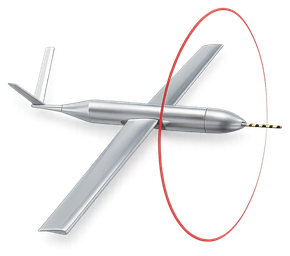
I know that's hard to believe, but I'm still waiting for a call back on the next topic, which is the ScanEagleDown and the FAA's giant leap fall short. Now, we broke that story over at the SUAS news, and I've been hearing a lot of feedback on both sides of the issue. Some people are like, oh, well, you're kind of making light of a mishap. How's it the FAA's fault?
Well, I don't exactly blame the FAA for the ScanEagle going in on the second test flight. I'm not really blaming them. I mean, things happen. But I do think to come out and say, oh, this is a giant leap.
We're moving forward. We've given a limited certification for commercial use up there on the shelf, which if you've listened to the program or read any of the stories and editorials and whatnot that I've written at SUAS news, you know, this has been going on since I was on the ARC. Although they were working for Shell, I was calling it the Arctic Shell game because they were up there supposedly counting seals and whatever else, and they had to legitimize this thing. So it took them a few years to legitimize it.
I also, when it was on the ARC, I predicted that this was going to happen, that a couple of the DOD vendors in the room would basically use either a program of record or a program that's been paid for by the taxpayer and a program, I mean training program, manuals, maintenance manuals, all of the things you would need for a program that were paid by the taxpayer through the government. And basically, they would take those programs, bring them to the FAA. FAA would rubber stamp them and let them fly.
My main point of contention was that this constituted an unfair economic advantage because these contracts and part of these contracts, they got paid to do this stuff. And I thought that that didn't constitute what I would call a square game for the little guy. Oh, the FAA said, no, we couldn't do that. We couldn't do that for several reasons.
One, you're right. It would be an unfair economic advantage or disadvantage to the small guy. Two, we can't use data from overseas in combat operations, so we really couldn't use it to justify rubber stamping the program. So that's never going to happen.
All right, great. Fast forward 2013, what happens?
Well, Patrick, that was then, this is now. Do you think so?
Well, yeah. And the musical chairs thing, maybe the people that were there aren't there anymore or aren't in charge of those sections. I mean, that's another thing we've been talking about over the years is it seems like just as soon as you start to have someone that you can work with and talk to, and even that's very fluid, they get pushed off into a corner somewhere or leave or go on to some private sector job and we start with a new crew or a new crop. That's certainly the case.
It is the case. So I, you know, I'm again not gloating. I just think it's kind of interesting that, you know, we did the rubber stamp. I mean, what was the criteria for the certification?
How come we can't have, you know, under 4.4 foam, plastic and wood or let's say frangible aircraft flying around not overpopulated areas in the Nass, you know, by the same criteria. I, you know, I guess that'll take more investigation and more asking of questions, although I'm already, I'm kind of on ignore over there at the FAA, even before the shutdown. And I have a feeling that that might be an intense or as could say, harbinger of the civilian drone movie. Because people are already talking.
People are already talking. I guess that may be a good thing that we're in the condition that we're in, because maybe the movie will get a little bit longer run. I'm thinking so. And while we're on that, they're going to screen that this Sunday, the 6th, at UAV day in San Diego.
And if you're in the area, I would suggest that you get over there and check that out. It's going to be at the, what is this?
The Rubin H fleet. Yeah, Science Center. And let's see that Sunday, October 6 from 10am to 4pm. And you there's, there's, they got a pretty good lineup of people that are going to be there.
And, but they are going to screen the civilian drone search and rescue documentary. And so you might, you might want to be there and see that. I know there are actually a lot of people that are waiting for that to be screened so they can see it. And we've been holding back, but I have a whole list of people who are very interested in seeing that movie once it's made public.
What, what food feedback have you been getting, Gene? Well, certainly that's the same on my end. We'll have to admit that I'm kind of waiting for the release of the room trepidation since I happen to have a little bit of a speaking part in that movie. But yeah, what is really surprising is the public in general has no clue that the FAA has just shut everyone down or has attempted to shut everyone down.
They go, wait a minute, that's, no, they're going to fall all the time. How come, well, how come you're not, what do you mean it's illegal?
So I find that very kind of general public that doesn't even know that it's illegal. Oh, well, I mean, that kind of, you know, the old bull run and some of the other incidents that we're seeing. I will say I have seen, you know, the whole movie. I got to, you know, I got to see that.
And I will say that it, it, you get kind of emotional watching it. And I mean, I know the story. I have, I mean, you know the story. You've lived the story.
Did it evoke emotion out of you when you saw the, when you saw the advanced copy? Well, you know, it's one of those things where, Patrick, when you go in the number of searches that I've been on and you retrieve the number of people that we've retrieved, that emotion is, is, is very strong and it's something that you have to deal with while you're there. And when I see it in the movie, it's just a confirmation of my determination to continue doing what I'm doing because I know that this is something that's here.
So I mean, to me, it's a validation. It's something like, when you see it in print, you know, if it came off the internet, it must be true. And if you see it in a movie, you know, it's even more so. Well, I definitely believe that, you know, obviously the movie, let's say vehicle or format is, you know, adds more dimension.
So, you know, when people see it, I think you're going to have some people going, man, you know, this is, again, this is a family show, so I can't say what I really want to say. We don't work blue here, you know, although I have been thinking about emulating Howard Stern's early days from channel nine in New Jersey to up the ratings. I'm just teasing. I do think when people see the movie, people are going to be, there's going to be some people that are outraged.
And there's going to be some people that are like, hey, wait a minute, you know, why can't we do this? And I think Ma did a great job. It's going to be great. I can't wait.
I mean, I really can't wait. Even though I'm not going to see it be screened in public on the six, I can't wait until it's made public and start hearing what people have to say about it interpretations and takeaway and whatnot. I think it's going to be great. I look forward to that.
And I think, you know, I had some, I'm also in the movie and I had some stuff to say and people think it's pretty heavy, but you know what? I thought about this yesterday, even, you know, with the DOD vendors and the FAA and all the rest of that, you know what?
I, and maybe you could give us some, your take on this too, but I went back, I went, I kind of rolled the memory banks back, gotten the way back machine and went back to 2004 and five. And you know what, Gene, you know what occurred to me is, here's what's occurred to me. The FAA, the DOD vendors, the supposed, you know, advocates and industry groups and there's a few of them and the standards groups and all the rest of that have done absolutely nothing. And I mean, zip zero, but destroy the small business part of this industry.
Am I wrong? Well, they certainly haven't contributed to anything that would be considered much more than a self-serving position in the industry, that's for sure. But I mean, getting back to the movie, one of the things, and you know, I saw what you put in there and of course, you know, I know what I did. And this isn't hardly worth, there's no embellishment that went on.
I mean, it is just the facts, just the facts, man. And we can't help but the facts are a bit damning. I'm sorry, that's just the way it works. No, so I really don't have any problem with what we said, but the way it's put together, it surprised me the strength that it had at the end of the day.
And of course, you know, you were there at the expo and they showed the trailer, just the trailer. And that evoked quite a bit of emotion from a very partisan crowd, I would have to admit, but it was pretty strong. It was strong. So I mean, you know, what I'm getting to is when people see it and they go, wow, that's pretty heavy duty, you know what, the whole thing is heavy duty.
And I think that it's time that we quit acting like the Emperor's new clothes. And this is how I think about it. I'm not sitting back anymore. And I'm going to worry about what I say.
I mean, I try and temper what I say. And sometimes I don't want it to hurt people or hurt their business or whatever. But as far as the FAA is concerned, I know people are like, oh, it's harsh. And, you know, they're really trying.
I don't I'm not buying any of that. I have not seen anything that shows me that they're really working on it. I mean, the whole deal is, you know, it's not a square game. I've been writing another article called the airspace integration banana republic.
And it pretty much amizes where we're at. And we have gotten nothing from the FAA. We've tried to interface with them. We've tried to work in the standards groups.
The standards groups are questionable at best. There's more stuff in there afoot now where the little guy is going to get locked out again. It's just, and we're supposed to go on and not say anything. So I'm not really I don't really care.
And especially in this in this case, with this search and rescue thing, you have an opportunity. And I think people are going to learn a lot. I know that I even learned a lot watching that. And the gentleman from I don't want to give be a spoiler, but the gentleman from Texas EquiSearch.
What's his name again? Jim Miller. He puts a bow on a couple of, let's say, applications for unmanned aircraft systems. And I think that, you know, he kind of blew me away.
And some of the stuff that he said, and how they decided to use and let know. He is a self professed hillbilly on a horse. But, you know, he has developed a very acute sense of what would help and what works in a search. And his insight is very helpful.
And it has been very helpful in the past. So I'm not surprised that you see that because I've seen it before in the past as well. It's pretty powerful. And he's you know, he's a he could definitely tell he's a he's a straight shooter.
Also, Mr. DeForest in the in the in the movie, another straight shooter. You know, it's going to be good. I can't wait to hear what people have to say about that.
So well, I'm actively awaiting that. Some of the other stuff that we have, we have Trappies Council files for motion to dismiss their fine. I don't know if you read that story, but we actually got that copy of that motion from from Trappies Council. Yeah, I actually read that entire motion.
Yes, I perused it. I went over that. And it would appear that they're going after the broad brush. And I don't know, you know, on one hand, I would think that the FAA is going to be very well prepared.
Because if they don't make this one stick, I think there's going to be there's going to be some heavy duty ramifications. Your thoughts, Gene?
Agreed. And I'm kind of hoping that it may get things kicked off the top dead center. You know, we've pushed for the lightly regulated, we've pushed for some sort of minimal standard. And we all agree that it's something that's going to be required.
The foot dragon that's gone on for since 2005 2006, especially since 2007, has got to stop and we really do need to get off the top dead center to get a standard out there. Either we get zero to 400. And you know, let's let it go and see what happens. Get people from you know, at least get the word out to keep them from flying away from airports much like facing 9157.
Let's do that. And maybe this motion, maybe that this whole trial thing will get to the point where the FAA says, okay, DOT, NTSB, we've got to do something. Let's get something out there. Now, granted, I don't want it to be like the Texas bill that came out that just was so vague and nebulous that everybody can, you know, look at it in whatever way they feel is is best at the moment.
But I still think that it could be used as an impetus to get something going for common sense regulation. Well, and I think if we had common sense regulation, you wouldn't have things like this. Now, I know, I mean, this case is kind of polarizing within the community. There are a lot of people that, you know, that don't agree with Raphael's, let's say, style.
And also, you know, it's, yeah, and then there's other people that are like, well, you know, this isn't this is an RC aircraft. And, you know, we have the tyrannical government coming in. And I mean, it's, it's definitely polarizing. Now, I will say, though, that they're in this in the motion, there are some interesting points in one of them.
And I think there's going to be a little disparity between the regular FAA and the Unmanned Aircraft Systems Integration Office. And what exactly is navigable airspace?
And some points are made. You know, is navigable airspace like the UASIO contends a half inch off of the ground?
I mean, when you when you go through flight school, they tell you that that's navigable airspace. I mean, you know, someone was flying a 172 down my street here. You know, is that navigable airspace?
What is navigable? I think that definition is going to need some tweaking thoughts. You know, I'll have to, I can see both sides of it. But I think another one of the incidents that occurred was there in Manhattan with that small quadcopter.
I mean, this segues right into it. You know, flying in between buildings and stuff like that is most definitely not navigable airspace. Even a helicopter would have a difficult time maneuvering through the concrete canyons of Manhattan. So, you know, common sense tells me, no, that's not navigable airspace.
But the statement made by a gentleman there that I almost got next to him was that someone made a conscious decision to do something for their own enjoyment that could endanger me. And I thought, you know what, that was a very profound statement. Because how long do we let these liberties go, you know, your own mutual enjoyment go until it hurts someone?
So, you know, it's such a sticky, complicated kind of a situation. But, you know, where do you have to get drawn into it?
I mean, the navigable airspace is an end to a means, I guess. But still, flying a quadcopter around Manhattan in that area, I mean, the guy obviously didn't know what he was doing. He dorked it into a building twice before it even hit hard enough to finally crash. So, where do you start?
Well, for somebody who has flown between buildings and whatnot, you know, I think, you know, just like there's fire weather and everything else, there is, you know, weather between buildings. Oh, absolutely. There's no doubt. I addressed that in my book.
I mean, there's wind eddies. There's all sorts of different swirling effects you can get into in the wind. Exactly. So, you know, there are issues there.
The other thing is, is I mean, you know, I did urban stuff with the Cracker Barrel. But, you know, if you show up on Sunday morning at 8 o'clock downtown, there's usually not too many people around. So, I don't think that, you know, there's a common sense thing also there that comes into play. And the other thing I'm going to put on that too is, you know, if you're going to do this stuff, I mean, you know, the insurance, I mean, and also product liability, I don't think, I really don't think, this whole aspect is an open chasm.
If you hurt somebody when you're flying your quad, like bull run, I mean, I don't, I'm surprised. I got to be honest with you. I talked to another guy out here in San Francisco. This is when he's flying.
He actually hires security because when he's flying, people are like, what are you doing? He's like, oh, I'm flying this thing here. And people are actually, he's actually had instances where people wanted to fight or they wanted to fight. He's actually had instances where people wanted to fight while he's flying because they thought he was spying on them with the drone.
So, I mean, I'm surprised at the bull run thing that, you know, like that crash in the crowd and people didn't freak out and either, you know, there was some kind of physical altercation or the guy's not getting sued or, you know, whatever else. And the same thing could have happened in New York. And these people don't have insurance. People say, well, insurance isn't available, but it is available.
But how do you weed out the yahoos or people going to pay? I mean, there's all kinds of stuff. But again, it all goes back to, you have nothing on the books except no. And obviously no is not working because, you know, thousands of people are doing this and you don't, they have no guidelines to go on.
So again, you know, it goes right back to the responsibilities on the FAA. You're going to say no and you're going to enforce your policy or what?
You're just going to let this go on and there's nothing you're basically showing that there's nothing you can do about this. And I said that years ago too. It's going to get away from you. It's going to be shown that you have no enforcement.
There's no possible way you could enforce this and no way you can control it. And so as the time lingers on, you're going to look ineffectual. That's a rig. Well, that's certainly what has happened.
But, I know that I don't need to point this out to you, but there has been a standard produced and it's been available since 2008. And it's the one that RCAPA produced along with a test program and along with some other standard operating procedures that we thought or that at the time we thought was at least a common sense approach. Well, and it was a common sense approach. And the funny thing is we gave that, the RCAPA gave that to CAA representatives from around the world, CAA UK.
We gave it all, put all that information into the Euro K Working Group 73. We gave it to anybody who wanted it and we gave it to the FAA. And the FAA didn't even look at it. They didn't care.
You know, probably why? Because we couldn't, we didn't have, well, I don't want to get into that speculation, but I will say that I'm almost thinking it's time to get proactive again. Somebody's got to do something and the government's proven itself to be ineffectual. So, it's another one of the things I'm working on.
I think it's time for the, the RCAPA is known worldwide. It's got a track record. A lot of people didn't agree what we were trying to do in the early days as it was too limiting. But what we have now is nothing except the potential for people to get hurt and the potential for the industry to get damaged.
So, keep your eyes peeled. Hopefully we'll, we'll pull something out of the hat on that one. But somebody's got to do something, Gene. I mean, I would, you know, I don't think we could go on much longer like this.
No, we're not. And unfortunately, it's going to have to extend even further to the, to the casual user. RCAPA, of course, you know, those guys are, we throw equipment in the air that we hold very near and dear and it generally costs a lot of money for us to get it up in the air. And we want to do our best to make sure that it comes down as gently as possible.
So these are guys with some skin in the game and they have a vested interest in following some of the guidelines that a whole bunch of people have come up with. It's the guy like that was on that New York terrace that went down to Sharper Image or wherever they only need to give them a plug or wherever. And they bought this little quadcopter and hey, we're going to, let's see if we can fly right here. We're up high enough.
I mean, there's the logic right there. We're up high already. So if I want to fly, good, right?
And off he goes. You know, if that copter, of course, you know, nobody reads the instructions when they put it, put things together, but if that copter had a booklet in it that said read before you fly or, you know, at least gave them some sort of, you know, hey, dummy, don't fly it over people. It's like having four blenders in the air. Why don't you try to catch it first while it's running and see how well that goes?
Well, I think you're hitting on a good point there. The whole manual thing is severely lacking in this industry. And I think that constitutes one of the hard things to deal. Because I keep it, well, you know what?
Hey, where are your emergency procedures? You know, oh, okay. Where's your checklist?
You know, I mean, you might want to put in there, you know, item 11. Make sure egg timer is close enough to hear a bell ring. There you go. There you go.
Procedural or mechanical. Either way, it needs a checklist. Oh, yeah. You know, things like that.
You know, make sure your batteries are charged. It's, you know, it's little things and people laugh at them. I mean, even on big systems, you know, $10 million. You don't check lists are for idiots.
You don't need checklists. I'm like, well, you know, I guess you're smarter than me because I like checklists. You know, that way. Pilots in the world use checklists.
All the really good pilots that I have ever known, they will not even approach an aircraft without reaching in and getting the checklist first. I don't care how many hours they've got. Well, it's because, you know, there are the, there's, you just forget stuff, you know, it's just human nature unless you're perfect. But I don't know anybody is perfect.
So anyway, I would encourage people, you know, think about some emergency procedures. Think about making up a checklist. That's another thing is, is, you know, I did want to talk about that too. I did.
I was down in Berkeley the other day. I was out Wednesday or Tuesday. I went down there, had a meeting with some guys. I went and did a site, another site visit for the expo, which we've picked a place for the expo.
It's going to be the Herbst, International something building in on the Presidio for the next, for the 2014 expo, which it's already getting a lot of, a lot of action. Ah, there we go. Herbst International Exhibit Hall at the Presidio. It's bigger than the last place.
And it's already, like I said, people are talking about it and I'm all psyched for next year because there's a big buzz. We are the week before AUBSI and a lot of people are like, Oh, you know, I don't want to make both shows. Well, this one's business and that one's military. You can decide what show you want to be at.
You can be at both. I'll probably make both, you know, but we're not, we're not doing police or military again at the expo. It's strictly business and there'll be some good people out there. We already have some people on the list and slated to speak and some of the stuff we're going to hear about.
We're supposed to, Kansas State is going to come out. Kyle Snyder is going to come out. We are going to have Maha talk and she's actually working on another film besides the civilian drone documentary Search and Rescue. Jeff Bland from NASA said he's coming out.
Got some guys from Europe that use, I think, micro drones, do oil and gas services, inspections on rigs in the North Sea. Going to get some regulatory updates. USGS says they're coming out. We're going to hear about insurance.
We've got a few other topics we're going to hear about, but I digress there. So I did that. And then I also, while I was down there, stopped off at 3D Robotics, say hi to John and Co. And John looks a little tired.
They're busy down there. There were a bunch of the ISIS copters or what is their new, it's an Iris. I forget what it's called. Anyway, they got their new products, Iris, and they got their new products out there.
And he tells me that they are looking to hire a bunch of smart people. So if you've ever wanted to be in the drone business and revolutionize some of these other industries, you may want to go to the 3DR website and look at the jobs tab there and see what's available. It's not all up there. So they're looking for people, I guess, engineers and salespeople and things like that.
So you could go over there and maybe there's something for you. They do look pretty busy. So I guess, you know, that was in the news too. They just got another $30 million in funding, which is a little bit of cash, right?
Yeah, a pocket change. Exactly. You could do something with that. I think though that the important thing with that is you're starting to see a lot of these small companies.
It's kind of funny. And I have noticed out there too, on the internet, that the larger DOD vendors are laying people off. Imagine that. I know, it's hard to believe.
The smaller companies that are up and comers and more, let's say, small business or personal drones, as some people call them or whatever, are hiring. Interesting. I think it kind of shows that the worm may be turning. But, we also have to temper that too with who's working the standards and who's working the regulatory work.
On one hand, it may look like we're getting some traction, but on the other hand, behind the scenes, people are working so it'll be harder for us to have traction. That's what I'm seeing right now. But I do think it's interesting. What do you say, Gene?
I agree. I don't think that building Did we lose you there?
Am I here? You're here now, but we lost you for a second. Oh, sorry. Okay.
You want the joys of cell phones. That's why I'll never use it for a command and control link. Anyway, I don't think there's going to be too many commercial entities that are going to want to build to mil-spec and try to sell to mil-spec because, again, you end up with your $100 hammer. Well, yeah.
It's a whole different market. That's even the difference. You just hit the nail on the head for the Small Unmanned Systems Business Expo. I don't really think you can play in both markets.
You can tell yourself that you want to play in both markets and I'm going to go sell to the military and all that. That's such a bad whole FBO deal, man. Unless you have a technology that is totally transformative, it's going to be extremely hard for you to play in that field unless, A, one, you know someone. B, you're willing to pay somebody to represent your company in those circles.
Or C, you already have a program going. Besides that, extremely hard to get into playing that field. I mean, I see it every year when I go. You've got all these people, they've got their products out there.
They think, oh, as soon as General Bag of Donuts sees my product, I'm in. But it doesn't happen. Again, it's very difficult. I'm not going to say, if you've got that Klingon cloaking device or whatever, now there's an exception.
You could get picked up by the military. But you just got some system you think is great that you came up with. Not so much. It's just a different world.
And then the same side on the other side of the coin is the agricultural guy going to spend a million dollars on a system to fly around his field and eyeball his soybeans. No way. The model just will never work in a million years. Especially when you look at the flight envelope or the proposed flight envelope.
And then heaven forbid that they lock up the beyond visual line of sight market with some expensive piece of machinery. You'll never be able to play in that. So they really can't play in both fields. They are definitely separate.
So you've got to just decide what business you want to be in, I think. That's a pretty fair assessment, right, of the market?
Well, I mean, yeah, the danger of cross-pollination between both sides is so great. And the government recognizes that. And the DOD is going to say the same thing. That's why you can't have military unmanned aircraft using our engines for civilian stuff because of the way that regulations are set up.
You have to even the video. We heard it right there from the Colonel there at Mather. He said, you know, I've got five predators that I can have it my back and call if we have a fire and we get data from those things. He says, I can't let my civilian counterparts look at it until it goes through D-Class.
That's timely. Come on. Most people don't recognize it. That's what happens.
Right, right. Well, you know, there's a lot of nuances. I don't think that people understand about this whole industry. And that's because, you know, you probably noticed people come from all walks of life that are getting into this industry.
And kind of interesting, you see some perspectives on different types of businesses and whatnot. But, you know, the clear picture of the industry and the clear picture of where it's going and things like that are definitely kind of skewed or let's say skewed by these other industries. And one of them, I think a lot of them would be the software industry. A lot of people, you know, you keep hearing, well, you know, it's just like some piece of software.
And if it doesn't work the first time out, it'll work next iteration. Aviation people wince when they hear stuff like that, yada yada and the different business models and whatever. But anyway, I do think one of the other the takeaway from today's show is I think we're at one of those points where things are ready to change. Agree or disagree with that, Gene?
I think we need to start working in that direction, to be honest with you. I would concur. I think that we're there are a few things afoot right now that are just a very fluid technology and industry. And there are definitely a few things afoot right now that could really change the landscape.
So, you know, I would say open your eyes and ears and look around, see what's happening and, you know, keep reading the SUAS news, of course, and listening to the podcast if you want to get your news first. But, you know, keep your eyes open, Gene, what any advice you'd like to impart?
You know, and there's a lot of folks out there that have some good ideas. And they need to keep putting those good ideas forth. There are a lot of guys in garage shops and, you know, mom and pops that have got really good ideas, like you said, you know, that they're waiting for General Bag of Donuts. But you know what, those same ideas can be applied to the industry today.
And if we can get that forum or we can get that the SUAS news to act as the central gathering point for that information, then or even our capital for that matter, if that organization comes back and we can use that as a gathering point, we need to focus on that because there's a lot of smart people out there that have solutions. They just need to be able to tell somebody about them. I would concur with that. And I hope, you know, I hope that the other thing too is, you know, we did get a lot of pushback in the early days when people well, you know, that's too limiting.
And it's not what I want to do. And I've got to do this. Well, you know, I just say, look at where we are today. Do we want to be here five years from now?
Do we want to be here 10 years from now? Do you want to be here 15 years from now?
I don't. So, you know, we got to got to crack the door open somewhere. I do think that, you know, if we can pivot and leverage correctly the, you know, the giant leap, the FAA's giant leap that fell short, I think that people can realize, look, if we're not, if we're more objective and we do things and we come up with a process that we can apply evenly across the board, when something like that happens, you don't look as foolish because you've laid down a criteria that everyone can follow. It was open.
It was honest. It was level. And you know what?
It didn't work. Okay, well, let's tweak it a little. What are they going to tweak in that case?
You know, special dispensation for a company that's spent millions of dollars on the forefront or upfront on the regulatory side of this, you know? I mean, that's not fair. It's not fair. It's not open.
And it's, and it's definitely not what I would call the American way. Well, maybe it is, but it's not what we learned about in the books sitting there in school. I don't know. But I'm kind of, you know, I've always been pushing for this leveler playing field.
If we have that, I think that there's less chances for embarrassment. Agree or disagree, Gene?
Well, transparency is always a good thing. There's no doubt about it. And if it's done by consensus, then it has significantly more chance of success. Well, I do think that this is a harbinger of more things that will blow up in their face, you know?
And it might be the catalyst for change because, you know, it's like, do you want more of this? Or do we want to actually have something that's workable, transparent, and involves the public and the public rulemaking process?
I know I beat that tired old drum. I know it's crazy talk, but in my mind, you know, you got to have the public and the public rulemaking process. I'm wacky that way. I don't know what to say.
But anyway, all right, well, we're out of time for today. Thanks again for tuning in and listening to the UAS News Podcast. Gene, anything in closing?
I think we've covered it all for this week, but stay tuned because there's going to be a lot happening. I would concur with that. All right, everyone. Have a good week.
Adios.