
UAS News Podcast — 2012-06-20
Transcript
Hello everyone and welcome to the UAS News Podcast. This is going to be another informative installment in a series of podcasts where we try and highlight the plethora of positive uses of unmanned technologies. And that encompasses the whole world. We're out there scouring the world looking for stories.
I'm your host, Patrick Egan, and we have our consummate co-host online today, ComsCheck Gene. Hey Patrick, we're 5x5 on this end, so let's get to it. Alright, today's podcast title, we have our special guest is Steve Morris with MLB Company. We're going to talk to him about some of his concepts about the test center idea.
I did want to talk a little bit about some current news stories. SUAS News today, the editorial staff, Gary and myself, came up with some endorsements for the AUBSI board of directors. There's a lot of good people on there. I know a lot of people on there.
The uncontested slates, we kind of let that go. I think they're kind of self-explanatory and I'd like to have endorsed kind of everybody, but I tried to keep the scope small. So I would suggest you go out there or go to the web page and check that out. Also, last week we scooped the new, I said the Global Hawk morphed into the Triton for Navy bands.
We scooped that one. That was a good show last week. What do you think, Gene?
It was probably one of the better ones from the legal standpoint and from the inside standpoint. I think there was a lot of information there and I hope everyone found it as informative as I did because it raised my eyebrows a couple of times. I would concur with that notion. I definitely thought there was a lot of gold in that one.
Again, that's what we're trying to bring the community with this series of podcasts. I definitely, when I try and bring the guests on here and the people that I'm talking to, I want to bring forth some unvarnished concepts, candid conversations, get the newsmakers to let us know how they feel about the things that they're into. That's the whole premise here and I thought that one was a good one. I'm going to go back and I did want to talk about the NIST thing one more time, Steve.
I want to talk about that because I did ask Gene how it went and Gene told me everything was great, which I knew it would be, but I'd like to get your perspective. Steve, maybe you could give us a little perspective on NIST. Okay. I don't know how much you guys discussed in the previous show, but NIST is a government organization that purchased five of our aircraft and Gene is operating them for NIST.
They're using them to study how wildfires burn and develop primarily so that they can use this information to design better buildings because quite often housing developments and structures are impinged on by fires that come from forests. There's basically a fire out in the wild and then it comes into a community and it starts burning things up. They want to figure out how to better build buildings
so that they can resist these fires and be more immune to it. The goal is to use these aircraft to study a very controlled burn and get data that will then calibrate numerical models that can then be used to model all kinds of fires digitally.
That's what these things are being used for. The aircraft are carrying CloudCap Taze gimbal systems, the EOIR gimbals, and they're being used to measure the temperature in various parts of the fire and then temperature, humidity, and wind in the air above the fire. At this point, Gene and the NIST customers have been trained on how to operate the aircraft. All the hardware is working and we've done probably about 10 flight hours with many sorties, just keeping the airplanes in close range
and just looking at hot spots on the ground, controlled hot spots, and in one case we looked at a controlled burn.
I think everything's going fine also. Well, as I told Gene last week, I had no doubts in my mind that it was going to be a success, no one who was involved. For the benefit of the listening community, we can go back a little way, Steve. I think the first time I met you was back in 2008 or maybe 2007 at the Silicon Valley Chapter Symposium.
That was at NASA Ames. Yeah, but I think we probably communicated through the RC Groups UAV Forum also. I can't remember exactly. It's been a little while.
Most of these people I do know that we bring on here, so just to give the audience a little background. What I would like you to do, Steve, if possible, is maybe you could kind of talk about yourself a little bit, explain who you are, your background, and how you got into this unmanned aircraft systems thing for the audience. Sure. Like many people who build unmanned aircraft, I have a background in model airplanes.
I am one of those guys who built model airplanes from my various youngest age, probably age four or five. Back in the 60s when I was born, you were allowed to have glue and razor blades when you were a kid. I was building model airplanes back then and desperately wanting to get a radio controlled airplane, which in those days cost hundreds of dollars for the simplest RC system, and it didn't do much very well. So I had to wait many years until I could get a radio controlled airplane.
But my interest in this stems very strongly from my playing around with model airplanes and things that fly. So all of my education has been in engineering geared towards aerospace and aeronautical engineering. Throughout my undergraduate and graduate education, I often used model airplanes to do experiments and to supplement my research. When I was a graduate student at Stanford in the 80s, I started MLB because we were, back then I was one of the first people to put a microcomputer in a small airplane for stability and control research purposes.
So in 1987, a friend of mine and I built a highly unstable tail-less aircraft that used a microcomputer, and we successfully achieved stable flight with an airplane that was extremely unstable and had no tail surface, just trailing edge flaps. And some people in the defense industry caught wind of that and asked to purchase the flight computer that we had built. And that's how I started MLB, was selling flight computers to people building unusual test beds for primarily stability and control work.
Now in the late 90s, we started to have a proliferation of small GPS units, small CCD cameras, and it occurred to me at that time that it was very ripe to build a small, fully autonomous unmanned aircraft. And so in 97, I started working on our first product, which was like a one and a half meter wingspan airplane that would fly fully autonomous and deliver geo-referenced imagery. And we started selling that in 1999. We started selling the first of the BAT series of airplanes.
And I just need to make it clear that MLB and BAT, we have nothing to do with baseball. The company is called MLB because the three of us that started it, that's our initials, Morris, Larkin, and Bradley. And at the time we started it, there was no Internet. We didn't think about what a stupid idea it would be to choose that as a name from a website standpoint.
And similarly, the BAT aircraft, the very first ones were little tail-less flying wings, and they kind of looked BAT-like to me. So I just started calling everything BAT. So that's where all that comes from. Since the late 90s, the products have morphed into more capable airplanes.
Our super BAT aircraft can fly for 10 hours and carries a cloud-cap autopilot and gimbal system and has its own launcher. And we're also working on a vertical takeoff and landing design, the VBAT, which the purpose of that airplane is to have long endurance in the 5 to 10 hour range and also eliminate the need for all of the launch and landing infrastructure. So the VBAT, because it's a tail-sitter, it's a vertical takeoff airplane, you don't need a catapult or a runway. You can literally launch and recover it from an area the size of a parking space for a small car.
And we think that's going to be revolutionary to how people operate these small UAV systems. So anyway, right now MLB is, we're still a small company of less than 10 people, and we're located in Santa Clara, California. We manufacture airframes, we design airplanes, and we make autopilots and gimbals, but primarily our products are using cloud-cap systems right now. That was pretty good.
Another thing is, you're one of the old timers, or the old guard, as I like to put it. And it's funny, I talk to people and they're like, hey, when do you think this is going to happen?
And how far out in the future is that going to happen? And in your bio that you just laid out, I've talked to people and some of the stuff that you've talked about, well gee whiz, when's that going to happen?
Well, guys like you already did it. And it's kind of funny. We're having this, I guess, people are kind of awakening to this technology in the regular media, and I find that kind of funny. One other thing I want you to do, because you talked about a lot of systems, and again, this is kind of a radio thing that's kind of a little bit of a theater of the mind thing.
So could you please give the audience your website address, please? Oh, yeah, it's www.spyplanes.com. That's S-P-Y-P-L-A-N-E-S.com. We chose that name back in the 90s when it just sounded like a fun name.
I guess some people think it has a more nasty connotation, but we don't spy on anyone. The purpose of my company is airborne access to information. And I see unmanned aircraft is a very valuable tool for getting your eyeballs into the sky so that you can see things that you would not have otherwise seen. And when I say you, I mean everyone from people trying to save lives to people trying to conduct their business to people who want to just know how to plan their day because they don't know how the traffic is on the highway.
So it's been over 100 years since the Wright Brothers first flew, and it's still very difficult to see what's going on around you from an airborne perspective. And I think that the products my company develops are going to enable that. Yeah, and it's funny that you mentioned that too. Even the website domain is when I was doing aerial photography, let's say professionally, I started calling it UAV photography.
And I think you've seen the Cracker Barrel system. And I was kind of tongue-in-cheek when the FAA was like, oh, you guys are flying UAVs, and I'm over here laughing at the deal. And it was kind of a tongue-in-cheek when I came up with Skyborg, unmanned aerial vehicle photography, and it was a $29.00 airframe. But you know, you got to recognize comedy when you see it.
I can sympathize with the website. All right. Well, you know, all very interesting stuff. I've seen your aircraft over the years, and I've thought the same thing.
I thought it was pretty interesting. I like the VBAT. It's a cool thing. You've got to get out there on the website and check it out.
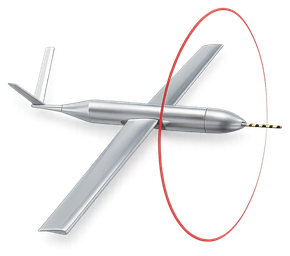
The other thing is today's the photograph for today's episode is when we did the fly-in for the FAA Small UAS Arc. And that's you and your guys out there on the lake bed at Edwards. Which was a good time for one and all. Did you have a good time out there that day?
You remember that day? Yeah, except for the heat. It's always tough. It wasn't any hotter than Texas, was it?
But you know, it's drier. It is drier, but you know, people used to laugh at Edwards, and I've got buddies over at NASA, and they're like, anytime anybody's going out to Edwards in the summer, the advice is bring a hat, you know. But after being in Umastan for a summer, Edwards and Palmdale, man, that's like a Shangri-La out there. At least civilizations within an hour's drive.
Yeah, Arizona's definitely the hot spot here. Exactly. So you know, it's pretty interesting. We had a good time with that.
Okay, well, I want to jump right into, you know, telling people that we had that meeting the AUVSI Silicon Valley Chapter meeting, which the next one, and I hope you're there, Steve, we're going to do the blimp hangar tour, and we're going to tour the Zeppelin NT out there as guests of Airship Ventures, and that ought to be fun. All right. I count on it. And but the land, you know, we'd sidebarred after that meeting,
and I was asking about the test centers, and you know, I've been going around and around with this test center and I had actually discussed some other efforts with people this morning about it.
And people are all over the map with this and then they're like, Yeah, we're getting all this small business involved in this, you know, I'm like, Really? Well, who, you know, who's small, who, you know, I like to try and package that and find out what people are thinking by small. So I've been involved in the Arizona effort to get the test center going. And I've been kind of talking to the people in Texas and whatnot.
But what I want from you is the small guys perspective to what it would take if just say, you know, we're going to have these are going to open this test center. And what would it take for you and your company to move to, you know, moose hat, Wisconsin or whatever, maybe you can you could fill us in on what you would need as a small business guy. It has to be the ultimate inconvenience. So right now the attitude with test centers is they sort of know that the customers out there are big aerospace defense contractors that have a lot of money
and a lot of the test center people are scrambling for test center status or seeing it as a way to bring in more government money.
And there's nothing wrong with that. It's just that the way the government money flows these days is it you know, gets handed down to special interest groups, large organizations. It is the government doesn't have a definitive program, like in the 50s and 60s when they wanted to encourage education in aerospace amongst, you know, school and college students where they were pouring money into everything to foster the development of the technology. And it's a disaster in an aerospace industry.
We don't have something like that. Now right now it's all trickle down. It starts to money flows to the biggest entities and hopefully it will end up maybe through a donation, making it into a university or employing more engineers. And the problem with that is that when state governments want these centers of excellence, they want to get some of that money and it can only now come from a Northrop Grumman or a Lockheed.
It can't easily come directly from the federal government. And because of that, a small business guy like me inadvertently gets categorized as potentially a Lockheed or a Northrop Grumman or a Boeing and they think, okay, we're going to charge everybody a lot of money to use this test center and that's how the state will be happy and the money of course will ultimately come from the taxpayers and the government.
But small business guys like me don't have that kind of money. And so for the ultimate convenience, I need a test center that is funded or set up in such a way so that it's funded by the government and I, as a small business guy, get invited to use it to foster the growth of small business and this industry in this country.
And that's kind of an attitude shift. Right now we don't have anything that I've seen from the national government level that wants to grow small UAV commercial companies. It's a neglected area but it's such an important area for the future of our country and for this industry. Right now it's all defense centric and a lot of that is, as you've been alluding to, is how the media has been handling it and how our national organizations have failed to manipulate the media to change that impression.
Because, you know, to be honest, the money has been flowing for the last decade all through the defense sector and everyone just ignores the potential of the commercial sector. So when I got into this, it was nothing but commercial. We targeted specifically the model airplane-sized UAV because model airplanes were operating essentially unregulated and that opened up a huge commercial opportunity that could, in terms of economic power, dwarf the whole defense operation and employ many more people and have a much greater impact on society, certainly a much more positive impact.
The government institutions haven't embraced this yet. There still is a fear for things that have not been properly categorized in terms of their risk from an analytic level. We're just acting as though any bad thing that might happen with an unmanned aircraft is entirely unacceptable and we haven't put any rational risk assessment on it. So because of all this, we have a dwindling commercial sector here, whereas in other countries that have slightly more liberal regulation or in some cases no regulation at all of UAS, they're growing like gangbusters in the commercial area.
Furthermore, we're cut off from selling to those countries because of our export regulations which treat all UAVs as missile technology. So in the United States, we're fairly backwards thinking at the moment. It reminds me a lot of what happened after the Wright brothers invented the airplane. It's a slightly different parallel but similar in that the Wright brothers got into a big patent war with Curtis
and the government, the whole bureaucracy of all of that stifled the innovation and growth of the aircraft industry until after World War I when we realized that everybody in Europe now had better airplanes because they had just gotten on with things and started making them.
We're going to find that out in the commercial sector. It's going to be a sad day when we're actually importing all of our UAVs from other countries. Even in the military world, we still kind of do that. We still buy a lot of Israeli aircraft.
We need a healthier UAV industry in the U.S. It's a big job growth area. It fits in with education perfectly. It's a perfect STEM, science, technology, engineering, math activity.
It is a perfect outlet for people who have an interest in computers and in mechanical robotic systems because flying robots are some of the coolest things around. Yet all the talk you hear is out of fear because admittedly many of these airplanes that are in use right now carry missiles. That's how people think of them. They don't think of them as being yet another way to see what's going on around us and to help people, another eyeball that does useful things for you.
That's the beginning of my rant on that. I want to give you more time because I know you're this choir over here. You probably didn't hear it but the frustration. I had to turn the mic off and scream because everything that you're talking about resonates with me.
The STEM thing, the technology, people buying stuff from overseas. I have a little joke that I like Chinese food and I want to eat their lunch before they eat our lunch. The other thing is I know that Gene's probably over there biting his lips. I'm going to let Gene add some comments to what you had to say.
Gene, do you have anything to say on this subject? I was doing exactly what you were doing, Patrick. Steve and I have talked about this at great length and you're right. The double standards and the favoritisms and the privilege is becoming very apparent.
It is extremely difficult for a small manufacturer of UA to go out, especially with ITAR regulations in place where you can't take your material outside the United States and actually utilize it. It's so restrictive and we even tried to approach the ombudsman if you were tall, Patrick, and we felt like there was an obstruction of commerce there. We couldn't even get past that stage to try to demonstrate how restrictive it was and how they really were, strangling an industry that as they had stated, as the accounting officer said, is going to be a $27 billion a year industry.
It's just none of it's here. Unfortunately, none of it is here. It's all going to be in China and the back rim. Right.
Well, I mean, you know, and I laugh at it because it's kind of ironic, but you know, it is very frustrating. You know, I'm really a small business guy and I want to, this technology, I keep telling people, you know, I can, without stretching it too far, can employ this technology and turn it into a professional six figure a year salary, hire people. It's not that hard. It's not that difficult, but there are a lot of things standing in the way of this, you know, and one of them is regulation.
And, you know, I'm writing a position paper for the SUAS News about this privacy issue. And really, I came to the determination this morning that it's almost impossible for us as a community to defend ourselves with this privacy thing. And if you look at, you know, and I only want to get into the extrajudicial killings or, you know, the higher force leaving their sensors on or people using predators in the United States. Besides all that, without definitive regulatory guidelines from the FAA,
you have the public out there thinking there'll be swarms of drones, you know, there's going to be one in every one of your windows eyeballing you.
And how do we, you know, and I go out and I say, you know, the regulations are going to be pretty restrictive and you're not going to be able to, you know, do this and that. And nobody has any idea. But I can't, I don't even have a document I can point to that says, well, we're going to be able to operate here and do this and do that. So, you know, don't, don't, don't, don't freak out too much, you know.
That's one thing. The other thing with the military stuff, I think as a community, you know, it's time that we just, we really need to get back to, hey, where are your friends and neighbors?
We're small business guys like Steve and Eugene. And, you know, we're out there and we employ, you know, your sons and daughters, your brother, uncle, whatever. These, these, they're just normal everyday people. And we're out here trying to do these normal everyday jobs.
Would you guys agree with that? Yeah. And, but I have a thought of, you know, every time I hear about all the problems, I inevitably try to think of at least one solution. Maybe it's not a great one or not.
Maybe it is. But, you know, let's just imagine that somehow we could have a new self-regulating agency form that would try to represent the commercial interests. And I'll be selfish here and I'll just say of small UAVs. Because one of the problems here is we can't cover everybody when we talk about UAVs.
They come in too many different sizes. We, just like the model airplane people, they've been able to carve out a chunk of activity that they self-regulate. We have to carve out some chunk for ourselves. And if we had such an agency and that agency had bylaws or rules that said, we are not interested in invasive surveillance and intrusion of the private public.
We will not carry weapons on our aircraft. And these are the bylaws. And if we had such an organization with enough membership that could get some lobbying power, then we can use that to express our own agendas and our own PR so that people would understand that, you know, here is a group that actually might even state in their bylaws that they encourage the government to create good regulatory law that prevents people from being unnecessarily, having their privacy illegally or unnecessarily invaded.
And those kind of things would create the kind of favorable image and distance us from some of the things that we don't necessarily agree with. Because what my fear in the long run is that all of these public needs and commercial uses of UAVs are unfortunately going to start being fulfilled by military systems operated by government agencies. We see some of this. Yeah, we see things like, you know, NASA flies a giant predator for wildfire work.
Well, that's nice, but it's not cost effective. And it's a government agency doing something that, you know, helps a little bit. But we need a lot of these smaller UAVs working side by side with firefighters. And that can only happen when it's a commercial thing.
And but then that's just that's a benign example. But then what if, you know, the police are the only ones that have UAVs or maybe the Air Force is operating a UAV, but loaning but allowing the data to be used by the local police departments. These are the kind of things that create the big brother fears that everyone justifiably is concerned about. And we need to actually distance ourselves and discourage that because that in my mind, that's the worst of all worlds is in the end of the commercial market falls into the bowing's and the Air Force and basically it's all government run.
Then we really don't know what's going to happen to our privacy. Right. And you know, you covered a lot of real estate there. And I wanted to I wanted to back it up.
And I know Gene probably wants to say some stuff too. But that is exactly what we were trying to do with the Remote Control Aerial Photography Association. You know, could be a professional guild that goes out there and talks to people about this. And we've tried to be the, you know, that commercial voice.
It's very difficult to do. And I've, you know, I have conversations with people about it all the time. But it's this this community and I'm sure you've probably seen this too, Steve, is a lot of mavericks, a lot of passionate people. And some of the issues that you had talked about, like trying to carve out that niche.
Man, I had that discussion with so many people that were like, well, you're not really encompassing what I do. Well, it's like, you know, I don't I have a limited resources in both time and money and I have to I can't let my reach exceed my grasp or grasp exceed my reach. And we tried to do that. I will say that, you know, there's been a lot of adversity with that type of group.
Also from the FAA, we used to do weekly calls. You remember that, Gene?
I do remember that well. And it was amazing how we were patronized. Not only were we patronized, but almost every idea that we had, they'd send us off and do some busy work. I mean, it's that whole SAR contest, you know, I'm going to lay it out here for people that don't know.
But that up back challenge was an RCAP idea. We were going to do that here first. We had it all set up. We were going to have a contest and I'm sure you will remember, Gene, because I remember you protesting on the call when the FAA said, not a good idea.
We don't want you to do that. So why don't you drop it?
And that was the beginning of the end for me on that phone call. Yeah. And we had already, you know, Gene had come up with all the rules and to find the target. And it was a blue tarp that was the shape of a person and yada yada.
It was all worked out. We're all gung ho, had sponsors, everything else. Very disappointing. But even that, and it was funny last week with the NIJ thing when they're talking about an online test, the RCAP had already done that.
We had several online tests, a video test that allowed us to secure commercial liability insurance, which people to this day still beat me up with, well, you can't get insurance. It's like, no, the insurance is available. We made inroads with this, you know, five star rated insurance company, yada yada. So we did a lot of work.
We did a lot of lobbying work and we still do a lot of lobbying work. I know that the RCAP, most people go, oh, geez, what are you guys doing?
I try and write about it. I can't telegraph everything that I do, but I'm still very active in the federal political circles with, you know, contacting the FAA. And my local house member here has actually written a letter to the FAA acting administrator on the behalf of RCAP to get small business a voice on the current SUAS arc, which, you know, I don't know if you've been following that one, Steve, but that one to me where you don't have any small business representation on an arc where, you know, in the charter it talks about resolving questions from the last arc.
I smell a big fat rat. Do you have any comments about that?
Well, early on I was approached by some of these arc committees to serve on them. But once again, as a small business, I didn't have time to donate to this and it was interfacing with a government bureaucracy. So there would be a lot of time and effort spent. So naturally the only people who can contribute bodies to that are going to be other big agencies.
And so you're just by just by the fundamental nature how it's set up, you're not going to get people like me heavily involved in it. And so that's one of these things where if we'd had this mythical national organization in place early on, it could have pushed against or helped influence an arc type committee. But, you know, it's a chicken and the egg thing and the regulations are going to come down probably sooner rather than later. I mean, sooner than a large well attended independent organization would occur.
So in the end, I just had this, I'm in the sit back and wait and see. It's something I can't affect as an individual. And it's frustrating, that's all I can say. I don't really know what else to do.
What I really would like is, you know, on this mythical national organization that votes for self-regulation of a small class of UAVs, I'd like that organization to try to grab as much real estate as it can. I respect and admire what RCAPA has done, but I want something bigger. I want something that represents, for example, anybody who flies something under 100 pounds, kind of like what the model airplane guys have done. And, you know, to be honest, I was really hoping that the model airplane AMA would have adopted it and embraced this whole thing and actually run with it.
Because if we just turn back the clock and imagine the AMA not afraid of bad-mouthing UAVs like they've done, then the AMA could have tapped into the perfect growth opportunity for the future of their organization, which is the educational activity, the introduction of all these young people who want to get into this field, the growth of the industry around it. The AMA would have been sitting on a pot of gold if they could have jumped on this with a more liberal attitude towards it. And they have a background of many years of self-regulation of aircraft under a certain size limit.
For historical reasons, they went a different direction and actually tried to divorce themselves from UAVs, and that sort of came around to bite them in the end, I would say. But, you know, if we could get the AMA and the AOPA to be more in line with a group of UAV operators under the 100-pound category, then we'd have the kind of lobbying power we need to make things happen. Otherwise, we have to create the organization from scratch. And anyway, that's just a thought on a possible plan of attack.
That's all. Well, and you know, this is what we need. You know, we need thoughts. You're an engineer.
You want to solve problems. And that's kind of a good thing. I will say, you know, I do want to say that too, you know, that your company and you supported ARCAP on the small UAS arc, and it was people like Steve's company that made it possible for me to even travel there and be involved. And then I wanted to just step on the AMA thing real quick.
I will say, you know, their, let's say, leadership was bifurcated, and there were some people that figured if we just got away from this unmanned aircraft thing, the problem would go away. But I have to be honest, I was on the, let's say, remote control subcommittee on the arc. And, you know, he basically had, we had been working on all this stuff. I wish I could have, I've been more involved with the arc, but it cost a lot of money to travel and all the rest of that.
But anyway, I had a real problem. And I had, believe it or not, I got the meeting shut down because I protested. When ATO got up, R.D. Williams basically said, we're writing the regs for model aviation.
I'm like, what were we doing for the last six, seven months? You know, were we just spinning our wheels over there, wasting our time?
You know, I have to say I was a little taken aback and a little frustrated with that because, again, you know, I had invested. I mean, I was on telecoms four days a week, you know, hours on end. It was very hard to hold down a job and be a participant on that arc, you know, and especially when I'm not working for a, you know, multimillion dollar company that was paying my salary, my travel, my per diem, and all the rest of that. I was usually hotwiring, staying in what I like to call the midnight special room, which is a room that I always had in D.C.
I was right next to the train tracks, you know, and that train would come by all night long. Anyway, that's either here or there. But those are the types of things that we were up against in the arc. And then, Gene, I want to let you jump in here.
You got any views on that one? Well, we've tried to participate as much as we possibly could and contribute as much as we possibly could, and I think there's still room for that. I haven't given up on it completely. Steve hit the nail on the head when he says we need to carve out a very small portion of it, and small is the operative word, that we need to look at small unmanned aircraft.
And that's something that our CAPA and the folks, the board members there tried to focus on as well. I still think that's a viable way to approach this. And I think if we show them what a small UA is capable of in the positive sense in terms of fire suppression, mitigation, risk mitigation, search and rescue, and that sort of thing, even the ACLU agrees that there are times when those tools are best used. And we need to leverage that kind of information to keep our momentum going.
Right. Well, the only other issue that I have with that is, you know, let's say this airspace integration thing is definitely very large and varied. And I'm going to have to tell you that from my perspective and interfacing with the, let's say, different iterations of the UAPO office, the airspace integration thing has not been a two-way street. It's all been one way.
You know, we remember the RCAPA guidelines that, you know, Mel and Ira basically were really the heavy lifters on that one, and how you could implement this program today, a group, a community-based organization that was going to self-regulate, had their own guidelines that you would subscribe to and whatever else. And, you know, the FAA was telling us, yeah, this looks great. Man, that sounds great. Let's see the online test.
Man, that is a great idea. Give them this information. Oh, you know what you need to do?
You need to go work with the RTCA. And that was another situation like the ARC. It cost them, you know, $2,000 or $3,000 to go to these meetings. And, you know, you would go to this meeting and the next thing you know, oh, the dude from ALPA is the chairperson for the small UAS, our small UAS part of this.
You know, and I'm like, oh, okay, he's qualified. That's like me getting on an ARC for part 121 aircraft. And I'm going to say, well, my experience is I've eaten peanuts in coach, you know. And, you know, everybody gets a little chuckle out of that one.
But, you know, it's true. It's like, this guy, he's getting experience. They don't have anyone. I mean, it's maddening.
And, you know, I will say, you know, Tad McGeer, right, Steve? Yeah. I worked with him at Aurora and he was at school a few years ahead of me. Well, you know, Tad, the engineer too, and, you know, Tad's up there giving physics lessons to the people.
I thought it was great myself. I found it very interesting, you know, to the rest of the ARC. And, you know, we did not have engineers on the ARC. The only real other engineer on there was Fred Mark from AMA Direct, you know.
And these guys are talking about fault trees and, you know, where to start with the reliability and safety and the numbers and everything else. And the rest of the crowd was just glazed over, man, and have any idea what they were talking about. And then along those lines, you know, if we could get those organizations to listen to some technical discussion on the whole matter, you know, the sticking point for us is the sense and avoid or see and avoid issue. And I think the FAA has really not thought about this in a way that makes a lot of sense for the whole range of UAVs that might operate.
When you look at the smaller aircraft, which are most impacted by not having a low-cost, lightweight sense and avoid system, and you look at, you know, let's just imagine that we had such a system right now. Well, you're flying along in the airspace and then in theory the small UAV always senses and avoids the manned aircraft. But I would bet that if you did a test, you'd find out that the manned aircraft almost never can see the small UAV and never actually has any skin in the game and sense and avoid because he can't see the threat.
It's too small. And by the time, given the speed differences, by the time he's on it, he can't do anything anyway. And if you turn back the clock to right now and you can say, look, the entire burden of sense and avoid falls to the UAV, not to the manned aircraft operator. It would be smarter if we did something that made it an even playing field.
And I would like to suggest things like, what if I flew with something that made my aircraft extremely visible, whether it's a low cost LED strobe system or, you know, low cost meaning like $500, but it just makes the thing look really bright and everyone can see it. Or I tow a 100 foot mile or streamer behind my aircraft. If I went the other way, would there be some way that the FAA might say, okay, for the kind of work you're doing down at low altitude with the smaller aircraft, you're visible enough that maybe we'll just let
you fly without any other sensitive avoid system and we'll put the burden on the guy in the airplane to miss you, like they do with balloons.
Now, I know that it's egregiously arrogant to think that an unmanned system would have some kind of right of way over manned. But from a pure safety standpoint, the biggest problem right now is that small airplanes are just not visible. And we're waiting for this silver bullet to be developed, this magical electronic system that's going to allow us to avoid them. But it's very lopsided in its burden.
It would all be simpler if everybody would agree to carry an ADS-B system, but we know AOPA is lobbying against that for, you know, people don't want to spend thousands of bucks to save their lives. So it's complicated, but we just have no voice in this and we're – and all the burden is falling on us because we have no voice. That's the upshot of all the tech – the lack of technical discussion has resulted in all of the burden falling on the UAV operator. And that's why – that's the other sticking point in this.
And I agree with that. And you know what?
I just had a conversation with people at MITRE about ADS-B and we're almost out of time where we've hit the two-minute warning here. But the – I am a proponent of the ADS-B thing. The infrastructure will be coming online here in 2013 and also it will be available on commercial platforms like the iPad and whatever else. And I'm going to suggest that ADS-B be – the mandate's 2020, the mandate for getting UAS into the NAS is 2015.
And I all – and I think we should close that gap. And I also believe that this ADS-B might be a tool for the public to – they could go out and buy this system and know what's flying around their house or place or business. And it would empower the public to, let's say, safeguard their own privacy. And if I wanted to go out in the yard and sunbathe naked or whatever, I'd be able to check this device out and see if anyone's flying around my house.
So all we can do about that one right now, because we are going to run out of time. Again, these conversations, sometimes I wonder, wow, is 25 or 45 minutes going to be too long?
And we always seem to run long on these deals and run out of time. Steve, I want to say thanks again for coming on. I look forward to seeing you on the 12th. And again, the conversation was very informative.
Thanks for having me. It was great. Hey, no problem. Gene, you know, we had to tolerate you again.
No, I'm teasing. I'll try to keep it a little quieter next time, okay?
I'm sorry. I know I totally hogged the whole conversation and I'm sorry about that. And we'll have to have to be a better listener. I'm working on that.
Anyway, to everyone out there and radio land. See you next week.