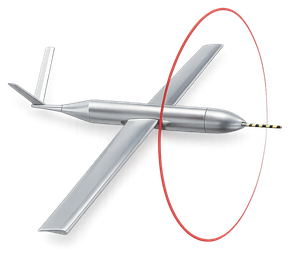

On August 21, 2024, I attended NVIDIA's Government Day at NVIDIA headquarters in Santa Clara, California. The printed agenda called the program "NVIDIA Tech Day: Accelerating the Future of Robotics & Autonomy." There was plenty to look at, especially in artificial intelligence, robotics, and simulation.
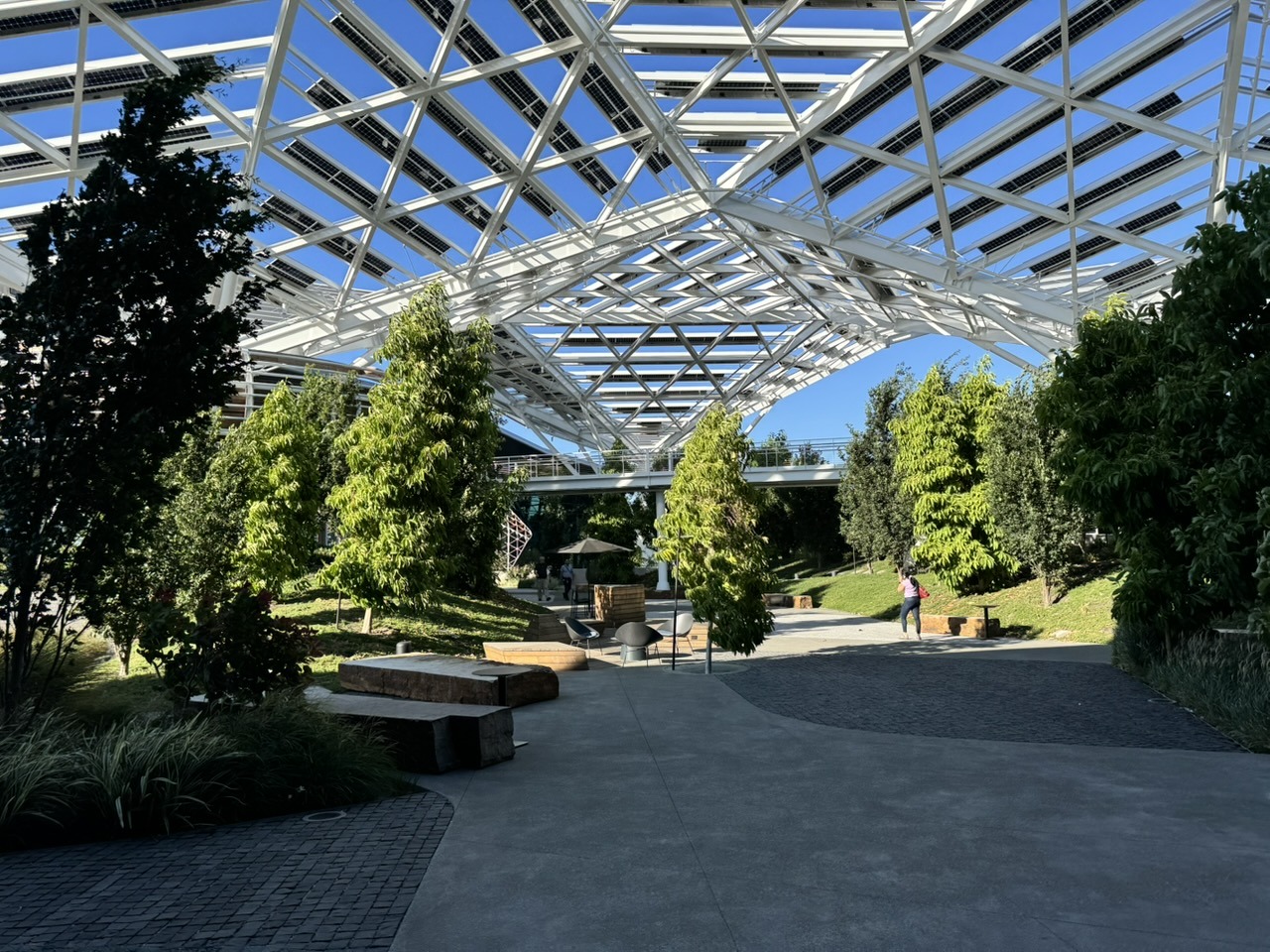
NVIDIA campus setting during the visit. Photo: Patrick Egan.
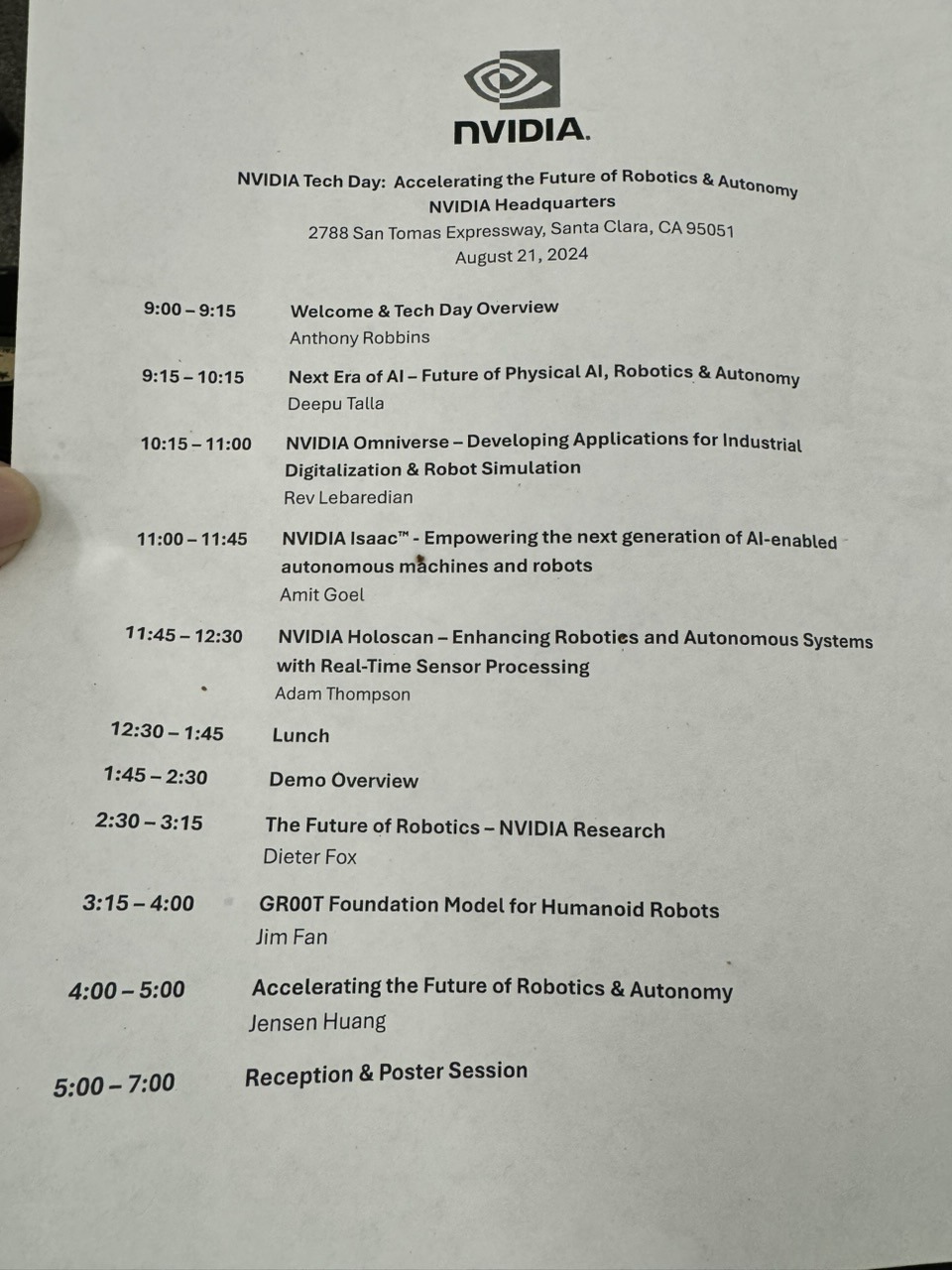
The printed NVIDIA Tech Day agenda, August 21, 2024. Photo: Patrick Egan.
One of the more interesting concepts was Robot GPT. NVIDIA was exploring how AI models could be used in robotics, including systems designed around the human form.
That last part makes considerable sense. We have spent centuries building the world around ourselves. Doorways, stairways, tools, vehicles, factories, and workplaces are designed for people. A robot that can operate in those surroundings without requiring everything to be rebuilt has some obvious advantages.
Of course, making something look like a person and getting it to function like one are two entirely different problems.
The presentations covered NVIDIA's work with simulation, robotics foundation models, Omniverse, and Isaac. Project GR00T, the company's humanoid foundation-model initiative, was part of the discussion. The idea is to use AI and simulation to help machines learn how to perform tasks in the physical world.
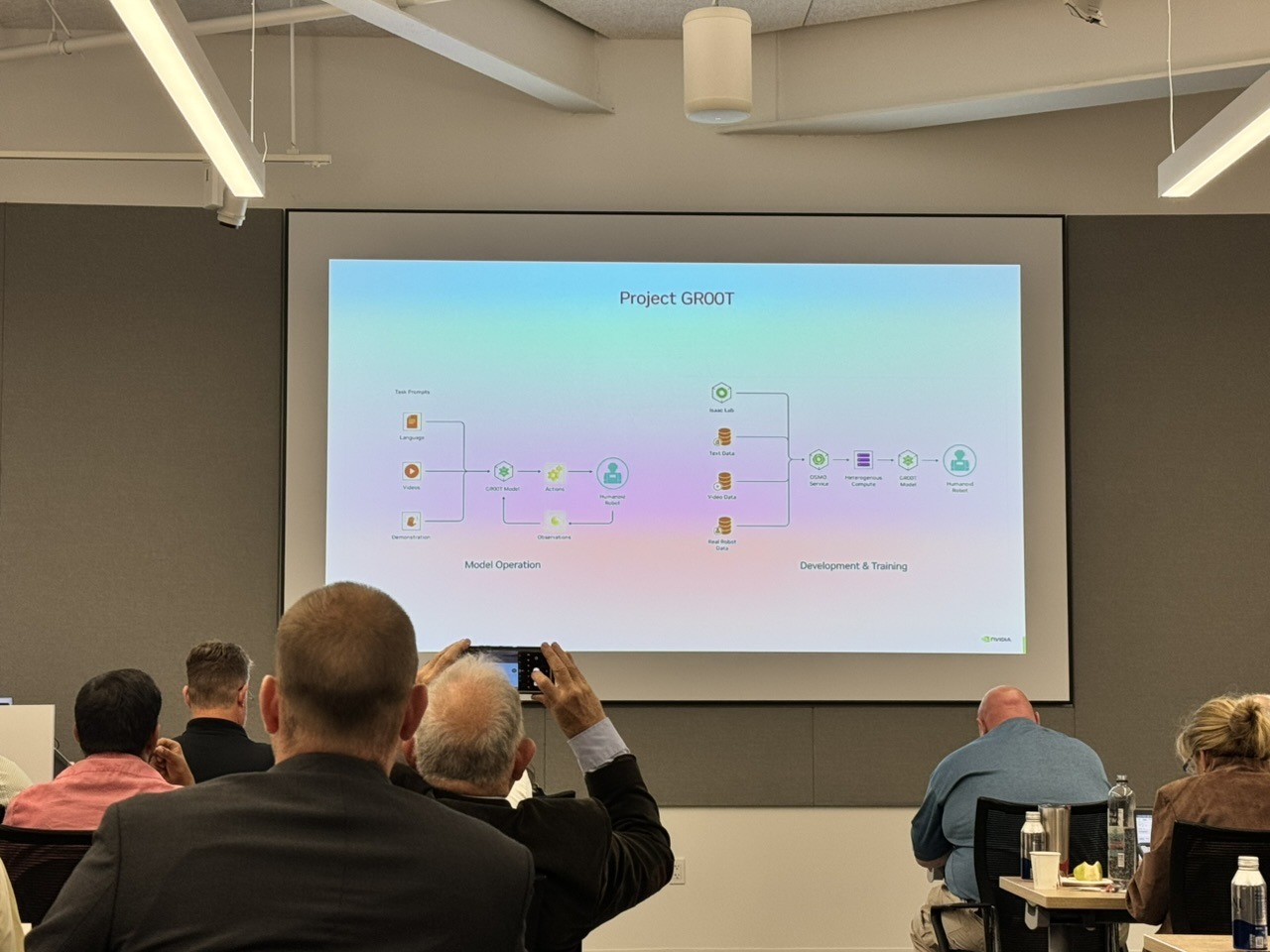
Project GR00T presentation slide. Photo: Patrick Egan.
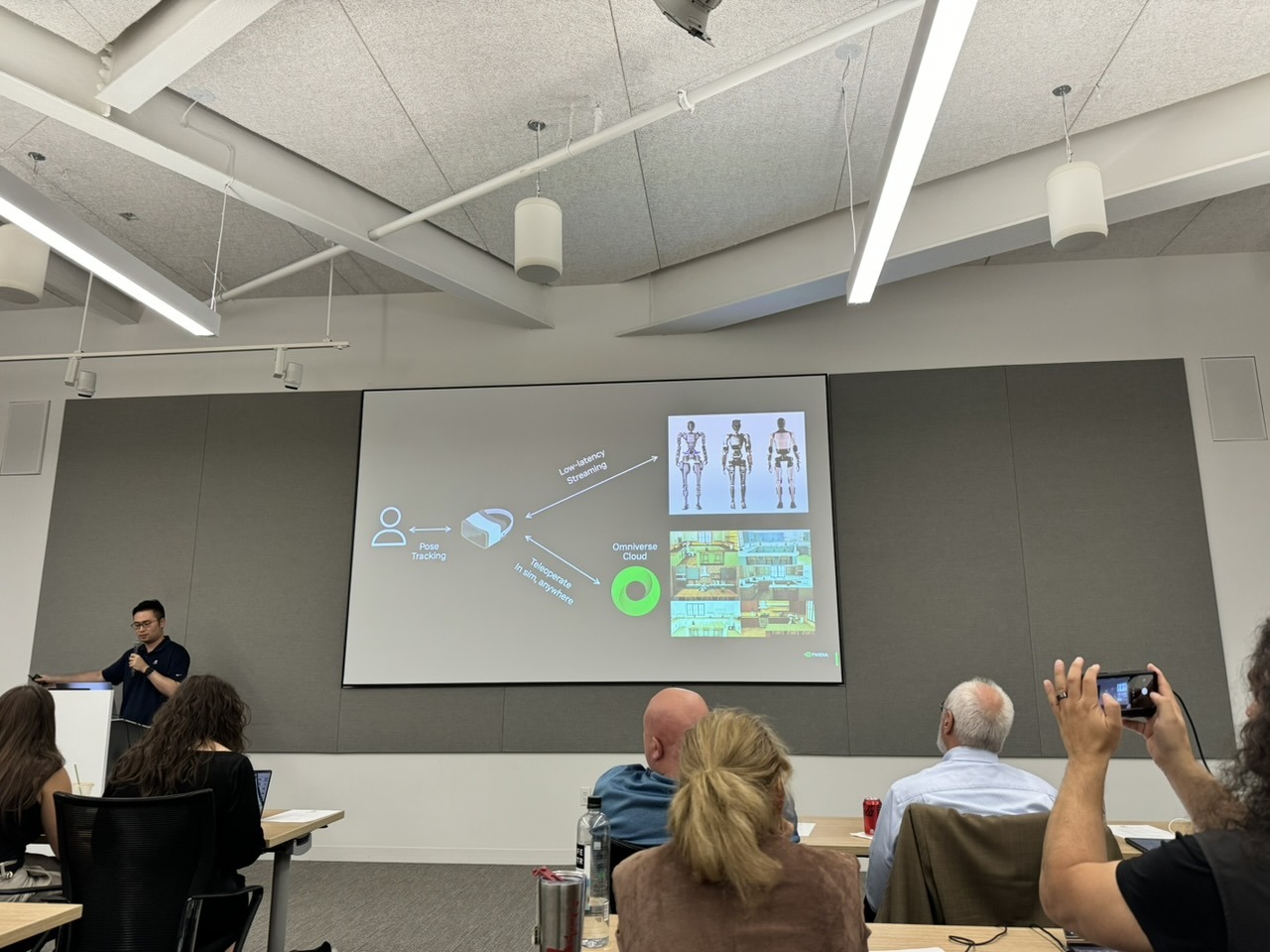
Human-form representations and simulation in a robotics presentation. Photo: Patrick Egan.
That brings me to Isaac Asimov.
Science-fiction readers will remember his Three Laws of Robotics. In simplified form, a robot must not harm a human or permit harm through inaction. It must obey human instructions unless doing so conflicts with the first law. Finally, it must protect itself, provided that protection doesn't interfere with the first two laws.
Not a bad starting point for a conversation about robots operating around people.
But Asimov understood that writing three rules was much easier than figuring out how to apply them. His stories regularly explored the contradictions, ambiguities, and unintended consequences of those laws.
What constitutes harm? What happens when instructions conflict? How does a machine distinguish a legitimate instruction from a dangerous one?
These are not particularly new questions. They become rather more practical when the machine is standing in your workplace instead of appearing in a science-fiction novel.
The human form may solve some problems involving physical access and compatibility with existing environments. It doesn't automatically solve problems involving judgment, reliability, or responsibility.
That distinction matters to government agencies evaluating artificial intelligence and autonomous systems. A controlled demonstration is one thing. A machine that works reliably in an unpredictable environment is another.
I also had the opportunity to question Jensen Huang about AI models, validation, and regulation. We discussed the difficulty of applying conventional regulatory thinking to a technology that changes so rapidly.
I wrote about his answer afterward. He compared regulating AI to trying to improve a twenty-year-old car through regulation.
It was an interesting exchange, particularly at Government Day.
The photographs accompanying this article were taken during my visit. They show some of the technologies NVIDIA was presenting and provide a useful record of where the company's robotics work stood in August 2024.
With the subsequent changes in AI and robotics, those presentations are worth revisiting. The computing hardware has improved, the models have become more capable, and the discussion has moved increasingly toward machines that interact with the physical world.
Asimov was asking some of the relevant questions decades ago.
We still need answers.