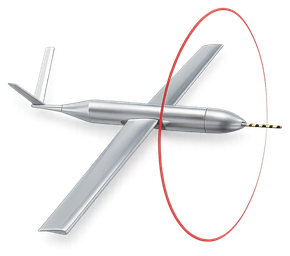

There is something strangely familiar about the current discussion around artificial intelligence, China and regulation because, if you have spent enough time around the drone industry, we have already seen a version of this happen. The technology is different and the potential scale of artificial intelligence is considerably larger, but the underlying problem is not particularly new: at what point does regulation protect the public, and at what point does the manner in which we regulate a developing technology begin to determine who is actually able to develop it?
NVIDIA CEO Jensen Huang has been raising exactly this question from the technology side. Patrick Egan asked Huang about AI models, validation and regulation and later described Huang's answer on LinkedIn, explicitly noting that he was paraphrasing: “AI is misunderstood and if you want to regulate a 20 year old car to make it better, go ahead.” The comparison is worth thinking about because technology does not remain fixed while government develops a regulatory response. The system you were worried about when you began writing the rule may no longer be the system people are using when the regulation finally arrives.
Huang made the argument considerably more directly at the G20 Innovation Ministerial in North Carolina on September 2, saying governments should “don’t regulate hypothetical, theoretical harm, regulate actual and pragmatic harm,” while arguing that technological advancement itself can resolve safety problems that earlier versions of a system could not. He then identified what he considered the largest danger for a country entering the current technological transition: “The worst outcome is that you don't take advantage of it. That you are left behind.”
Then, on September 14, the whole discussion became almost surreal. Huang was sitting onstage at the All-In Summit in Los Angeles when President Donald Trump called him, and Huang put the President on speakerphone in front of the audience. Trump rejected the more catastrophic predictions about AI and said, “The robots are not going to be taking over the world. That’s not going to happen.” Whatever anyone thinks of Trump's assessment of AI risk, the competitive concern underneath the political language is harder to dismiss: the United States is not regulating technology in a world where everyone else agrees to stop until we are finished.
For those of us who have been around unmanned aircraft for a long time, that question should feel uncomfortable because drones were one of America's first broad opportunities to move autonomous and increasingly intelligent machines out of laboratories and military programs and into normal civilian life. Even relatively inexpensive commercial drones brought together navigation, communications, sensors, cameras, software, automated stabilization, mapping and increasingly capable forms of machine perception in aircraft an individual, hobbyist or small company could actually purchase. Agriculture, infrastructure inspection, surveying, search and rescue, public safety, filmmaking and many other applications followed, but what always interested me was that a drone was becoming something much more significant than a small aircraft. It was a mobile computer operating in physical space, and once the sensors, communications and software were there it was fairly obvious that autonomy and intelligence would continue moving onto the platform.
The United States had nearly every advantage one would expect to matter. We had aerospace companies, defense research, universities, software developers, venture capital, a huge domestic market and generations of model-aircraft enthusiasts who already understood radio systems, aerodynamics, lightweight structures and flight. We also had the opportunity to introduce another generation of Americans to robotics through something they could build on a workbench, take into a field, crash, repair, modify and learn from. That last part is important because technological industries are not created only by corporations; they grow from the number of people who have enough access to become interested in the first place.
What happened instead was not simply that the FAA took too long. The more serious problem was that the regulatory system repeatedly treated very different aircraft, users, operating locations and consequences as though they belonged inside essentially the same aviation risk model. Part 107 was part of that problem. It was late in arriving and overly broad in application at the same time: late in providing a commercial framework, while generalizing across an enormous range of small unmanned aircraft and operations before we had developed a mature understanding of how different those risks actually were.
The FAA itself acknowledged this difference when it finalized Part 107 in 2016. In its own analysis, the agency said small UAS could pose “significantly less risk” to people and property than comparable manned-aircraft operations because of the difference in mass, contrasting aircraft under 55 pounds with general-aviation aircraft typically weighing 1,300 to 6,000 pounds. The FAA also correctly identified risks that are particular to unmanned systems, particularly seeing and avoiding other aircraft and maintaining control links, but that acknowledgment makes the broader regulatory treatment even more important. If the risk is different, then regulation should remain sensitive to the actual aircraft, location, operation and consequence rather than assuming that flying a small machine over an empty field belongs conceptually beside carrying human beings through the National Airspace System.
Under Part 107, commercial pilots entered an aviation-style certification system requiring an initial aeronautical knowledge examination through an approved testing service, while routine operations remained bound by visual-line-of-sight requirements and numerous operating limitations. Even today the FAA says a Part 107 operator who wants to conduct an operation outside the regulation has to obtain a waiver, and routine BVLOS remains unavailable under ordinary Part 107 without one. The proposed Part 108 rule intended to normalize BVLOS was not released until August 2025, nearly nine years after Part 107 took effect. The FAA itself described that proposal as reforming “outdated regulations” that had been holding innovators back.
That is not a trivial delay when the primary economic advantage of an autonomous aircraft is that it does not require a human being to physically follow it around.
Imagine designing an autonomous inspection aircraft capable of covering miles of pipeline, railroad, utility lines or agricultural land, then discovering that the routine regulatory model expects the person operating that autonomous system to remain close enough to continuously watch the aircraft with unaided vision. You can demonstrate another safety case, apply for a waiver and spend the time and resources necessary to obtain permission, but every additional step changes which companies can afford to participate. Large organizations build compliance departments. Small organizations run out of money.
The recreational side should have been the place where we preserved experimentation and low-cost participation, particularly because traditional model aviation had already operated for generations with a strong community safety culture. Congress apparently understood this problem before the FAA did. Section 336 of the FAA Modernization and Reform Act of 2012 expressly said the FAA “may not promulgate any rule or regulation regarding a model aircraft” that met the statutory requirements, preserving a broad recreational safe harbor while still allowing enforcement against genuinely dangerous operations.
The FAA nevertheless imposed its 2015 registration rule on recreational model aircraft. Model-aircraft hobbyist John Taylor challenged that rule, and in 2017 the D.C. Circuit did not leave much ambiguity about what had happened. The court found that the registration requirement directly violated Congress's prohibition and vacated the rule as applied to model aircraft. The court's reasoning was almost comically straightforward: Congress said the FAA may not promulgate a rule regarding model aircraft; the FAA promulgated a rule regarding model aircraft; therefore the rule was unlawful as applied to model aircraft.
Congress later changed the law itself. In the FAA Reauthorization Act of 2018, Congress replaced the old Section 336 framework with what is now 49 U.S.C. §44809, creating a statutory exception for limited recreational operations. That exception preserved recreational flight, but under a much more structured environment: the aircraft must be flown recreationally, the operator must follow safety guidelines developed by an FAA-recognized community-based organization, operations generally remain within visual line of sight, aircraft subject to registration requirements must be registered, and recreational pilots must now take an aeronautical knowledge and safety test. The current TRUST test is at least free and online, but the important point is what happened to the culture around the activity.
Remote ID added another layer, and this is where I think people outside model aviation often miss the practical consequence. Recreational aircraft weighing less than 250 grams can generally avoid registration and Remote ID when used strictly recreationally. Go above that threshold, however, and registration generally applies; if the aircraft does not have compliant Remote ID equipment, it may be flown without broadcasting only inside an FAA-Recognized Identification Area. FRIAs can only be requested by FAA-recognized community-based organizations and educational institutions, and both the pilot and aircraft must remain inside the FRIA during the operation.
Think about what that means for the way Americans historically became aviation enthusiasts. Somebody could build or buy a model airplane, know a farmer with an empty field, get permission to use the property and spend the afternoon learning how to fly. Today, if that existing aircraft weighs more than 250 grams and lacks Remote ID, the fact that the location is a huge empty rural field with practically no risk to anyone does not itself make the location compliant. Either the aircraft needs the required Remote ID equipment or the operation needs to occur inside a FRIA. The actual physical risk could be lower than almost any manned recreational aviation activity imaginable, yet legality can turn on electronic identification equipment and whether the geographic location has gone through an institutional approval process.
That is what I mean by treating all systems, all locations, everywhere as though they are essentially the same.
There are individually defensible arguments behind many of these requirements. Registration can help identify an aircraft. Remote ID can aid accountability. Knowledge testing can improve understanding of airspace. Visual line of sight can reduce collision risk. The problem becomes visible when all of those controls accumulate. The individual does not experience them as separate entries in the Federal Register; the person experiences the entire stack as friction between having an interest in something and actually being allowed to do it.
That friction has consequences. The FAA's own 2026 aerospace forecast says recreational operator registrations are declining and that the trends suggest recreational sUAS operation “may be on the decline.” The data are complicated because remaining registered operators appear to own more aircraft per person, so this does not establish that regulation alone caused the contraction. Hobby interests change, products change and generations find new things to do. Still, when participation falls while the barriers to lawful participation have multiplied, it is reasonable to ask whether we are regulating only risk or also regulating people out of the activity.

Hobby technology has long provided an entry point into controls, electronics, mechanics and experimentation, often years before those skills become professional ones.
Yesterday's hobbyist is tomorrow's engineer, programmer, mechanic, entrepreneur, pilot or inventor. A kid trying to figure out why a quadcopter oscillates is learning something about control systems. Someone building an FPV aircraft is learning radio communications, electronics, power systems, video transmission and mechanical design. The hobbyist who breaks a machine, opens it and figures out how to make it work again is developing a relationship with technology that is fundamentally different from someone who is only permitted to consume it.
While we were making participation more difficult, China was building drones.
DJI did not have to wait for the United States to solve every policy problem before improving cameras, flight controllers, batteries, software, manufacturing methods, supplier relationships and production scale. China did not become dominant because of Part 107 alone, and I don't believe serious analysis supports reducing the outcome to one FAA rule. Chinese manufacturing capacity matters. Labor and capital matter. Component supply chains matter. Industrial policy matters. DJI also made very good products at prices competitors struggled to match.
But regulation is part of the same competitive system. An American company trying to create a scalable autonomous service has to consider not only whether it can make the aircraft work, but whether the operation will be legal, how long approval will take, how much certification will cost and whether the rules will change before the company reaches scale. A manufacturer selling into a much larger global ecosystem can keep iterating while that conversation occurs.
The outcome is difficult to ignore. A 2025 Commerce Department filing from the American Drone Data Protection Coalition calculated DJI at roughly 90 percent of 2024 U.S. Part 107 registrations. That group has an obvious policy interest and its number should be understood in that context, but other sources have reached the same broader conclusion about Chinese dominance. Reuters has described China as supplying roughly 80 percent of commercial drones or their components globally, while congressional testimony years earlier was already putting DJI alone at about 70 percent of the market.
Now the United States is trying to undo that dependence because drones are no longer merely interesting flying cameras. They are infrastructure tools, police systems, agricultural systems, mapping platforms, logistics machines and, as Ukraine has demonstrated to anyone who was not already paying attention, fundamental components of modern warfare. The U.S. Army has announced plans to buy drones on a scale approaching one million units while trying to develop supply chains that do not depend on Chinese motors, electronics and components. In other words, we are now spending enormous effort trying to reconstruct industrial capability after the strategic importance of the technology has become impossible to ignore.
Once the air has been sucked out of the room, it is very expensive to put it back.
This is why I look at the current discussion around artificial intelligence with considerable concern. 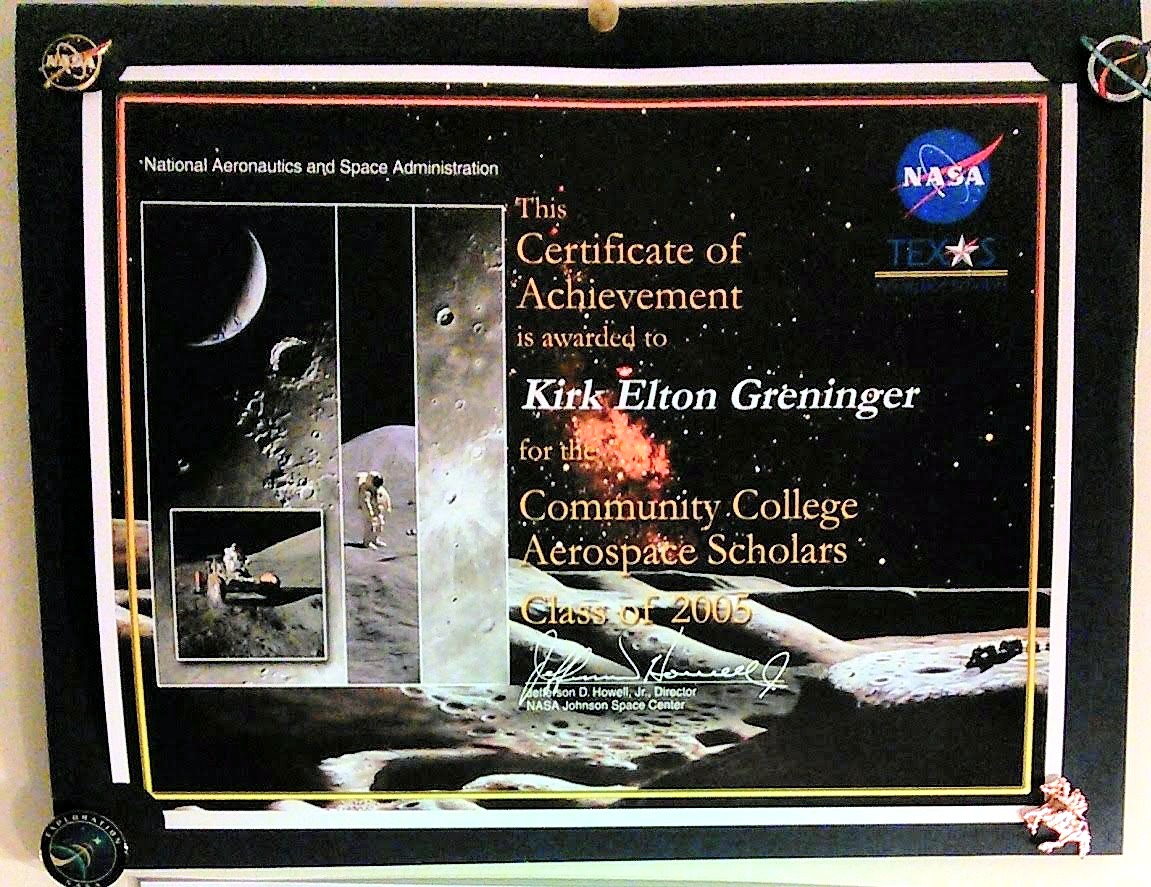
Kirk Greninger’s 2005 NASA Community College Aerospace Scholars certificate, part of a technical path spanning aerospace, interactive systems and artificial intelligence.
My interest in AI did not begin with ChatGPT. In 1995 I was laying out concepts for AI-based interactive educational agents using synthetic video. The systems available to me at the time could not practically build everything I had in mind, but interactive multimedia was already combining databases, graphics, audio, video, user input and scripting, so the objective was obvious enough: what happens when the interactive system begins to understand something about the person using it and changes its behavior accordingly? By 1998 I was studying AI ethics, so the idea that ethical questions suddenly appeared when large language models became commercially successful is somewhat amusing to me.
The ethical questions are real. What should an intelligent system be allowed to do? What information should it have? Who owns the data? Who is responsible when it causes harm? What happens when the interests of the company operating the intelligence are different from the interests of the user? What happens when the system moves from offering information into controlling machinery, medical treatment, financial decisions or weapons?
Those are legitimate questions, and none of them require treating every artificial-intelligence system, every application, every developer, every computer and every possible future capability as though they present the same risk.
This is where Huang's argument about existing regulators becomes more interesting than the political shorthand of being “for” or “against” AI regulation. If AI is performing a medical function, we already have a medical regulatory environment. If intelligence is operating a vehicle, transportation safety agencies exist. Aviation, banking, securities, consumer products, communications, privacy and weapons already have bodies of law that deal with consequences in those domains. New technology will certainly expose gaps, but the fact that gaps exist does not automatically mean the underlying act of developing intelligence itself should become a licensed privilege available only to the institutions large enough to satisfy a new regulatory structure.
The reason I think this distinction is critical is that regulatory costs do not land equally. If complying with a new requirement costs a trillion-dollar corporation a few million dollars, that is an expense. If the same requirement costs an independent developer or five-person company a few million dollars, that is a prohibition. Even when the words of a regulation technically apply equally, its practical effect can establish a minimum economic size for participation.
We saw a version of this in drones. The organization with lawyers, regulatory specialists and sufficient capital can pursue waivers, exemptions, certificates and special operating authority. The individual, enthusiast and small business experience the same system differently. Add enough friction and some of them disappear, not because the technology no longer interests them but because there are other things in life that do not require asking permission at every stage.
Artificial intelligence is especially vulnerable to this because one of the remarkable characteristics of the present technology is that capable systems have begun reaching ordinary people. An individual can run models locally, modify software, experiment with retrieval, train adapters, connect models to sensors or build an agent without owning a billion-dollar laboratory. Universities and small companies can investigate architectures that do not fit the roadmap of the dominant vendors. People who were previously consumers of artificial intelligence can increasingly become developers of it.
What happens if we decide that is the dangerous part?
What happens if the regulatory structure treats a locally operated experimental model, an educational project, a medical diagnostic system and the largest frontier training cluster in the world as variations of the same regulatory problem? What happens if licensing, reporting, compute controls, insurance, certification or legal requirements create enough friction that independent developers stop participating? Do we actually make AI safer, or do we simply transfer development into the hands of a small number of corporations and governments that can afford the regulatory burden?
And while we are doing that, what is China doing?
This is not a hypothetical competitor. Stanford's 2026 AI Index says the model-performance gap between the United States and China has effectively closed. American and Chinese models have traded places at the top since early 2025, and as of March 2026 Stanford measured the leading U.S. model only 2.7 percent ahead on its composite comparison. The United States retains significant advantages and produces more leading models, but China leads in areas including publication volume, citations, patent output and industrial robot installations.
So the assumption that American dominance in AI is simply a permanent feature of the landscape should sound familiar to anyone who remembers the early commercial drone industry.
America had aerospace. America had Silicon Valley. America had universities. America had defense research. America had investors and engineers and entrepreneurs. Surely we would dominate drones.
Then DJI controlled the room.
There is an additional distinction here that I think gets lost whenever China is presented as either completely unregulated or impossibly centralized. China can regulate the behavior of technology very aggressively while simultaneously deciding that the industrial capacity to build that technology is strategically essential. Those are not contradictory policies. A government can tightly control how a technology is used while encouraging enormous domestic investment in chips, robotics, models, manufacturing capacity, power and technical education.
The United States needs to decide whether it understands the difference.
I have been thinking about versions of this problem for a long time because the tools available to ordinary people matter. In 2013 I wrote that the tools in an economy eventually need to “trickle down to the public or street” because familiarity removes mystery from technology and spurs innovation. At the time I was talking about computer and electronics manufacturing, and about how frustrating it was that Americans could use and configure sophisticated products while increasingly lacking access to the components and industrial capability necessary to build them ourselves.
Artificial intelligence takes that concern to another level because intelligence itself is becoming infrastructure.
I grew up with computers in an era when using one often meant knowing something about what was inside it. You opened the case, moved jumpers, installed drives, replaced cards, built networks, broke software and learned why it broke. None of that made every hobbyist an electrical engineer, but it produced a population that was not frightened by the machinery. The computer was something you could touch.
Will AI remain something Americans can touch?
Can an independent researcher still develop a new architecture? Can a university investigate an unpopular idea? Can a small company operate its own intelligence rather than permanently renting access to somebody else's? Can an engineer run a capable model locally, change it, examine it, break it and discover why it failed? Can somebody working in a garage, basement, lab or small office develop something none of the dominant AI companies thought to build?
There is a meaningful difference between American corporations controlling artificial intelligence and the American people having the practical ability to develop artificial intelligence. Those two conditions can overlap, but they are not the same thing.
In any event, the lesson from drones is not that every regulation is bad. Aviation rules exist because aircraft can hurt people, and AI will produce applications where failure can cause very real harm. The lesson is that regulation needs to remain connected to actual risk, and actual risk depends on what the system is doing, where it is operating, what capability it possesses and what happens when it fails. Treating all systems, all locations and all users as though they represent the highest imaginable risk does not necessarily produce safety. Sometimes it produces attrition.
That attrition is difficult to see while it is happening. One hobbyist decides the paperwork is not worth it. One student chooses another field. One startup cannot raise enough capital to survive an approval process. One manufacturer gives up on hardware and writes software for somebody else's platform instead. None of those events looks like the loss of an industry.
Then, ten years later, somebody looks around the room and wonders why all the drones say DJI.
That is the part of the current AI debate I think we cannot afford to miss. Safety matters, ethics matter and national security matters, but competition matters as well, and regulatory policy occurs on a clock whether government acknowledges that clock or not. Technology continues advancing. Capital moves. Researchers move. Manufacturing moves. People lose interest. Other countries learn.
Artificial intelligence gives the United States a much larger opportunity than drones ever did. AI is moving into aviation, robotics, science, medicine, education, manufacturing, communications, transportation, defense, media and nearly everything else that uses information. If we get the regulatory architecture wrong, the consequence will not simply be losing market share in one interesting technology sector.
So when somebody says we need to regulate AI, I don't think the useful response is simply yes or no. Regulate what? What actual harm are we addressing? Does the application already exist inside a regulated industry? How capable is the system? What happens if it fails? Who bears the cost of compliance? Can an individual still experiment afterward? Can a university? Can a small company? Are we reducing danger, or merely creating a financial threshold below which Americans are no longer allowed to participate?
And while we spend the next five or ten years answering those questions, what will China build?
We already had one major opportunity to place autonomy into the hands of the American public and grow an industry around it. We overregulated much of the opportunity and created unnecessary friction for people whose actual risk was often extremely low, while participation eroded and domestic industrial capacity failed to keep pace. Eventually we discovered that the company controlling much of the market was Chinese.
I would rather not spend the next twenty years discovering that we did the same thing with intelligence.